Sarvangasana (Shoulder Stand) is the 'Queen of Asanas' — a full inversion that stimulates the thyroid, calms the nervous system, and activates the Vishuddha Throat Chakra.
The queen of asanas offers her gifts to all who approach with humility and patience.
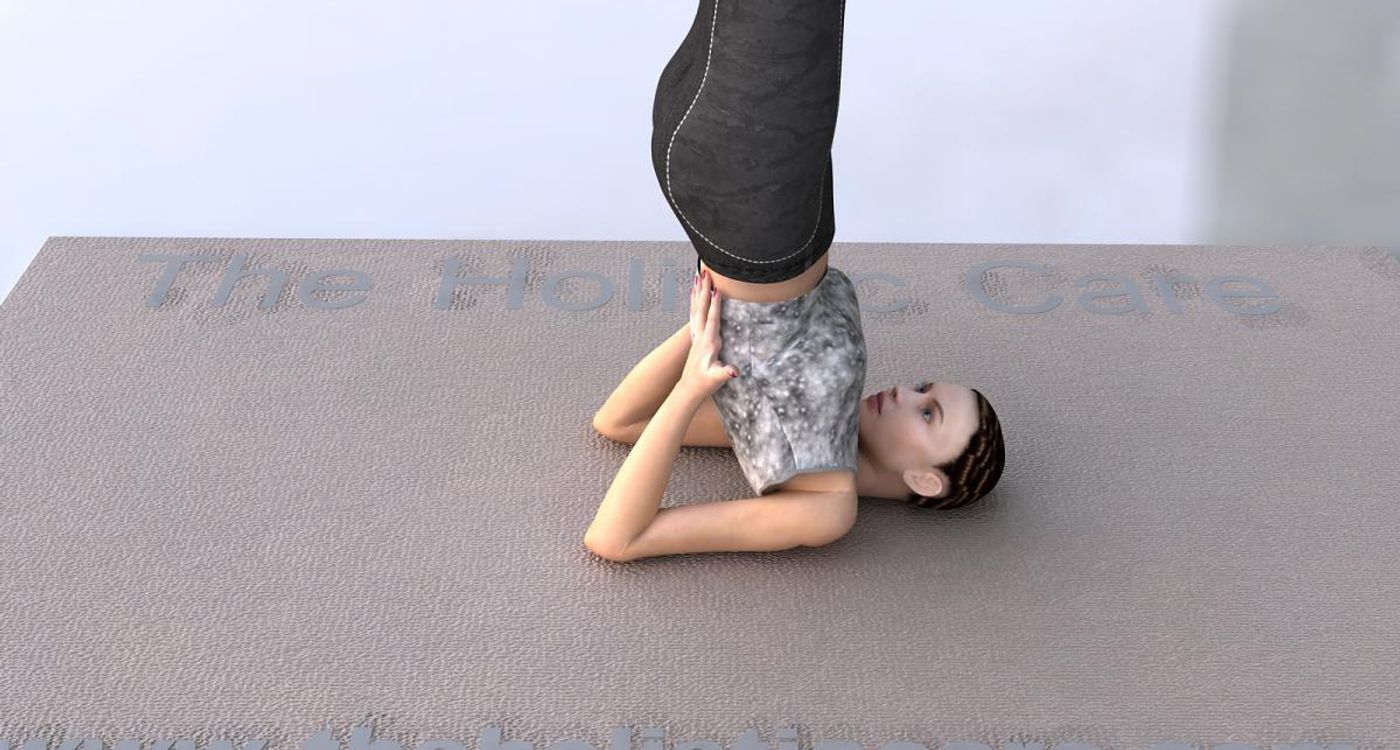
Sarvangasana — Shoulder Stand (All-Limbs Pose) — is a intermediate-level yoga posture that is revered as the 'Queen of Asanas' — a full inversion in which the body is supported vertically on the shoulders and upper arms, stimulating the thyroid, calming the nervous system, and reversing the gravitational effects of daily life.
Sarvangasana (sarva = all, anga = limbs) is so named because it benefits the entire body — from the thyroid and parathyroid glands to the heart, digestive organs, and legs. Classical texts describe it as the single most important asana for overall health. When performed with a folded blanket under the shoulders, it is both safe and deeply restorative, making it accessible to most practitioners willing to approach it with patience and proper technique.
How to Practise Sarvangasana: Step-by-Step Guide
Begin in Savasana (Corpse Pose) with a folded blanket placed under the shoulders. Follow these steps with mindful breath:
- Lie on two folded blankets (shoulders on blankets, head on the floor).
- Bend the knees and draw them toward the chest.
- Place the hands on the lower back for support and swing the legs overhead.
- Straighten the legs upward toward the ceiling, supporting the lower back with both hands.
- Walk the hands further up the back toward the shoulders — coming more vertical.
- Keep the chin drawn in toward the chest (natural Jalandhara Bandha).
- Breathe smoothly for 2–5 minutes (progressing over weeks from shorter holds).
- To exit: bend the knees, support the back, and slowly lower vertebra by vertebra.
- Counter with Matsyasana (Fish Pose) for the same duration.
Physical Benefits of Sarvangasana
- Stimulates the thyroid and parathyroid glands through the chin-lock compression.
- Reverses venous pooling in the legs — relieving varicose veins and tired, swollen legs.
- Calms the nervous system through the inverted parasympathetic response.
- Strengthens the upper back and neck in the supported vertical position.
- Improves circulation to the brain and pituitary gland.
Mental & Emotional Benefits
- The inversion shifts perspective — literally and metaphorically — supporting a fresh view of habitual mental patterns.
- The Vishuddha (Throat) Chakra is activated through the natural chin-lock, enhancing communication, clarity, and authentic expression.
- Extended inversions produce measurable reductions in anxiety and improved mood.
- Classical texts liken Sarvangasana to the moon — cooling, nourishing, and reflective.
Energetic Benefits: 🔵 Vishuddha (Throat) Chakra
Sarvangasana is closely associated with the Vishuddha (Throat) Chakra, the energy centre governing authentic expression, clarity, and inner truth. Regular practice activates and balances this chakra, bringing its qualities more fully into daily life. To deepen your understanding of this chakra and its influence on your wellbeing, explore our beautiful Vishuddha Poster — a visual anchor for meditation and a reminder of the energy you are cultivating through your practice.
For the complete chakra map and a guide to balancing all seven energy centres, see our Yoga Asanas for the 7 Chakras guide and our Complete 7-Chakra Interactive Chart.
Modifications & Variations
- Always use folded blankets under the shoulders to protect the cervical spine.
- Practise Viparita Karani (Legs-up-the-Wall) as a safer and equally beneficial alternative for beginners.
- Keep the knees bent if the hamstrings are tight and straightening the legs creates spinal strain.
- Never turn the head in Sarvangasana — this is a serious safety precaution.
Contraindications & Safety Guidelines
- Neck injury, cervical disc issues, or spondylitis: do not practise. Substitute Viparita Karani.
- Glaucoma or detached retina: avoid all inversions.
- Menstruation: traditionally contraindicated; substitute Viparita Karani.
- High blood pressure: practice only with experienced teacher guidance.
- Pregnancy beyond the first trimester: avoid.
Science & Research
Physiological studies on Sarvangasana document reduced heart rate, lowered blood pressure, and significant parasympathetic nervous system activation during the hold. The thyroid stimulation produced by the chin lock has been measured in yoga therapy studies, showing changes in T3 and T4 levels with regular practice.
Related Poses & Practice Resources
Deepen your practice with these related resources: Halasana (Plough Pose) | Matsyasana (Fish Pose) | Sirsasana (Headstand) | Savasana
Support your yoga practice with our Mega Bundle Chakra Harmony Collection — all 7 chakra posters and guides in one beautiful set — and our Seven Chakra Affirmation Pack to reinforce the energetic shifts your practice creates.
Frequently Asked Questions
Why must I use blankets under my shoulders in Sarvangasana?
The blankets elevate the shoulders, creating space for the cervical spine and preventing dangerous shear forces on the neck vertebrae. This is non-negotiable for safe practice.
How long should I stay in Shoulder Stand?
Begin with 1–2 minutes and progressively extend to 5–10 minutes over months. The Iyengar tradition prescribes up to 10–15 minutes for therapeutic benefits.
What is the counter-pose for Sarvangasana?
Matsyasana (Fish Pose) is the classical counter-pose — it extends the cervical spine in the opposite direction, restoring neutral alignment after the deep flexion of Shoulder Stand.
Inverted, the world is seen differently — and in that shift of perspective, wisdom is born.
Written by
Editorial Team