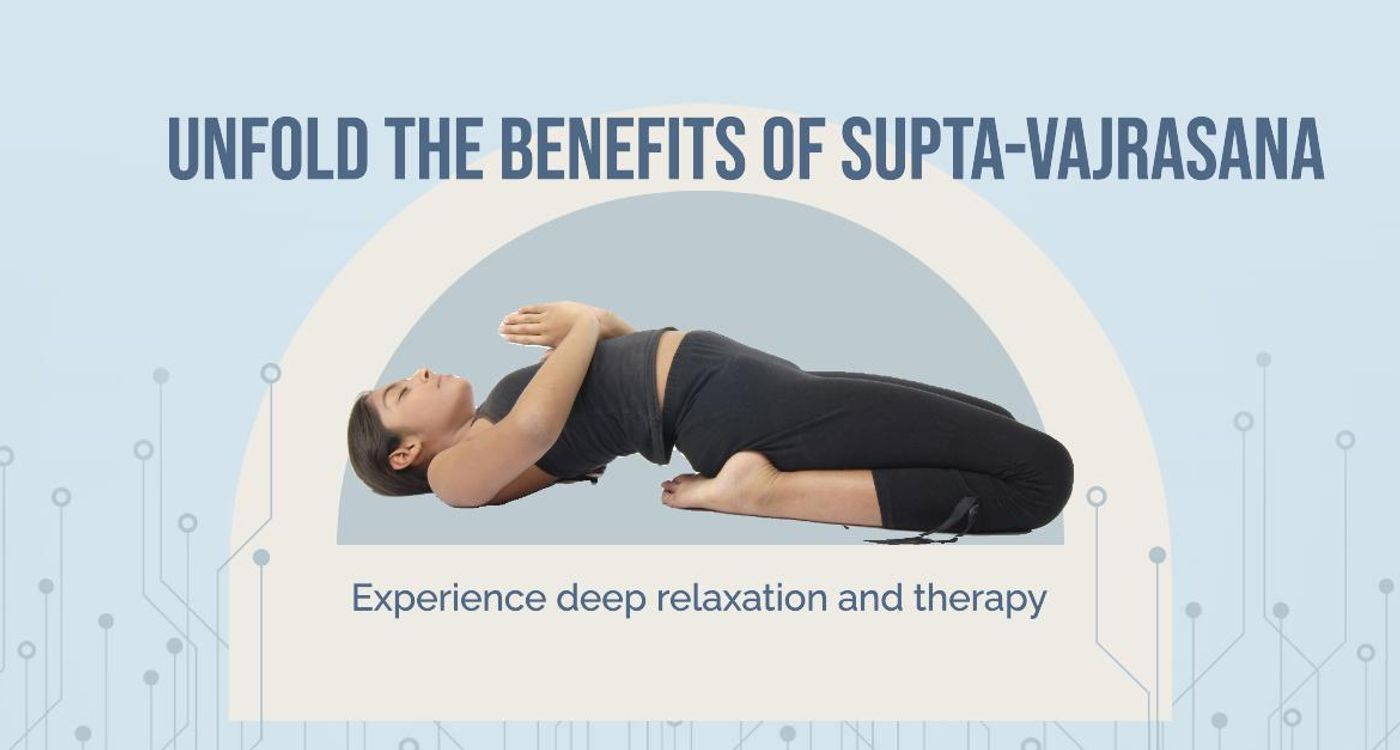
Supta Vajrasana (Reclining Thunderbolt Pose) is a deep kneeling backbend that stretches the quadriceps intensely, opens the heart, and activates the Anahata Heart Chakra.
Quick Answer: Supta Vajrasana, or Reclining Thunderbolt Pose, is a backbend practiced from Vajrasana by reclining the torso behind the heels. It stretches the thighs, ankles, abdomen, chest, and hip flexors. Because it places strong demand on the knees, ankles, and lower back, it should be learned gradually with props and avoided when pain appears.
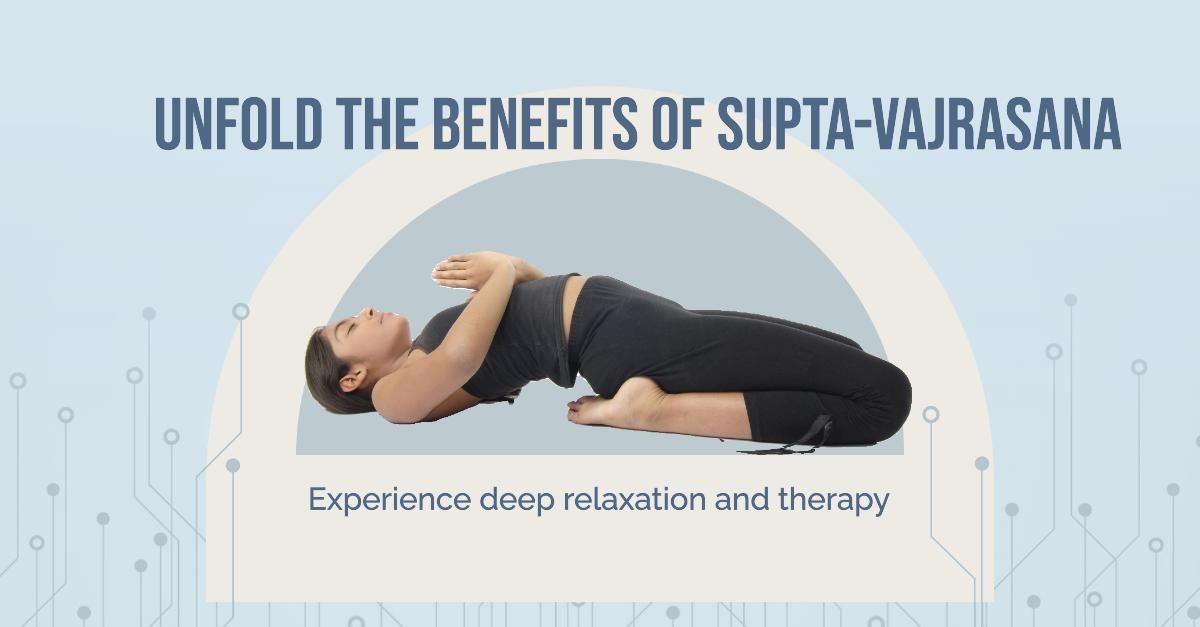
What Is Supta Vajrasana
Supta means reclining and Vajrasana means Thunderbolt Pose. Supta Vajrasana begins from kneeling and gradually lowers the torso backward. In the full posture, the back rests on the floor while the knees remain folded.
This is an advanced variation for many bodies. It can be deeply beneficial when appropriate, but it is not a pose to force. The knees and ankles must be comfortable in Vajrasana before reclining is attempted.
The posture combines a kneeling seat, a front thigh stretch, and a backbend. That combination is powerful, but it also means the body needs several permissions at once. The ankles must tolerate folding, the knees must accept deep flexion, the thighs must lengthen, and the spine must extend without compressing the lower back.
For this reason, Supta Vajrasana is best approached as a gradual supported practice rather than a final shape. The intelligent version is the version that lets the breath stay smooth and the joints stay quiet.
Step by Step Practice
Begin in Vajrasana
Sit between or on the heels depending on your tradition and comfort. Use a folded blanket under the ankles or knees if needed. The knees should feel stable and pain free before moving further.
Take several breaths before reclining. Notice the front of the ankles, the kneecaps, the inner knees, and the lower back. If Vajrasana itself is uncomfortable, do not move into Supta Vajrasana. Work with Thunderbolt Pose or another kneeling variation first.
Recline Gradually
Place the hands behind you and lean back onto the palms, then the forearms. Pause. If the knees or lower back feel strained, stay there or come up. If comfortable, lower onto a bolster or blocks behind the spine.
Move in stages. Palms, forearms, bolster, and only then lower support. Each stage should feel possible for several breaths. If the knees lift sharply, the thighs cramp, or the lower back grips, you have gone far enough for that day.
Use the Breath
Let the front body open with each inhale. Keep the knees grounded and avoid letting them splay wide. Stay for only a few breaths at first. To come out, press into the forearms and hands, leading with the chest.
Coming out matters as much as going in. Do not roll sideways or jerk up through the head. Press into the elbows and hands, lift the chest, and return to Vajrasana slowly. Then extend the legs forward and move the knees and ankles gently.
Preparation for Supta Vajrasana
A safe preparation begins with the ankles and knees. Practice Vajrasana with support, gentle ankle stretches, and simple kneeling awareness. The aim is not to force range but to learn whether the joints can fold without pain.
The front thighs and hip flexors also need time. Low lunge, supported Hero Pose, and gentle quadriceps stretches can prepare the tissue that Supta Vajrasana asks to lengthen. If the thighs are very tight, the lower back will often take the missing movement.
The spine should be prepared with milder backbends such as supported Fish, Bridge Pose, Sphinx, or Camel with hands on the pelvis. These poses teach chest opening and back-body support before the knees are placed under greater demand.
A good rule is simple: if a supported preparation feels intense, stay with it. There is no need to progress to the full posture. The body adapts through patient repetition, not negotiation.
Benefits of Supta Vajrasana
The pose stretches the quadriceps, hip flexors, ankles, abdomen, chest, and throat. It can improve front-body mobility and counter the folded posture created by sitting. It may also deepen breathing by opening the ribs and upper chest.
Traditionally, it is associated with digestive support and vitality. Modern practitioners should balance that traditional value with careful respect for joint safety.
For students who can practice it comfortably, Supta Vajrasana gives a strong opening across the front body. The thighs lengthen, the abdomen expands, and the chest lifts. This can create a feeling of spaciousness after long periods of sitting, cycling, driving, or desk work.
The posture also teaches humility. Many flexible students can move deep into backbends but still feel the knees object in this shape. Many strong students discover that strength alone does not make the pose safe. Supta Vajrasana asks for listening.
The breath benefit comes when the chest opens without lower back compression. In a well-supported version, the front ribs can widen, the diaphragm has more room, and the exhale can settle without collapsing the spine.
Common Mistakes
The biggest mistake is moving too quickly from Vajrasana to the floor. Another is ignoring knee pain. Pain in the knee is not a stretch signal. It is a stop signal.
Avoid arching only in the lower back. Support the spine so the chest can open without compression. Props are not a beginner compromise. In this pose, props are intelligent practice.
A third mistake is letting the knees widen without awareness. Some bodies need the knees slightly apart, but uncontrolled splaying can twist the knees and reduce stability. Keep the legs organized and choose support rather than forcing the knees down.
Another mistake is holding the pose too long. Because the posture can feel dramatic, students may stay beyond the point of useful sensation. Short, clean holds with good exits are safer and more educational.
Who Should Avoid It
Avoid Supta Vajrasana with knee injury, ankle injury, severe lower back pain, recent abdominal surgery, pregnancy, or any sharp discomfort in the posture. Students with hypermobile joints should also be cautious because the pose can move too far before warning signals appear.
A supported bridge, gentle camel, or reclined hero variation with substantial props may be a safer alternative.
People with meniscus injury, ligament injury, kneecap tracking problems, severe arthritis, nerve symptoms, or recent knee surgery should not experiment with this pose casually. The same caution applies to ankle instability, severe plantar discomfort, or sharp pain at the front of the ankle.
During pregnancy, deep prone pressure is not the issue here, but the strong front-body opening and joint demand are usually unnecessary. Choose side-lying rest, supported Bridge, or gentle chest opening instead.
Helpful Next Steps
Supported Variations
The most useful variation is reclining over a bolster placed lengthwise behind the spine. Sit in Vajrasana, place the bolster behind you, and lower only as far as the support allows. Add a folded blanket under the head if the throat feels overstretched.
Another variation is forearm support. From Vajrasana, lean back onto the hands and then the forearms, keeping the chest lifted. Stay there and breathe. This version may be the complete pose for many students.
You can also place a block or folded blanket between the sitting bones and heels to reduce knee flexion. If that still causes pain, choose a different pose. In yoga therapy, the right modification is sometimes a completely different shape.
How to Sequence Supta Vajrasana
Practice it after the body is warm, never as the first deep posture of the day. Prepare with gentle kneeling, thigh stretches, lunges, Sphinx, Bridge, and Camel variations. Rest afterward in Child Pose only if the knees like it, or extend the legs and lie on the back.
Avoid placing Supta Vajrasana after exhausting leg work when the knees and thighs are already irritated. Also avoid combining it with many other deep knee flexion poses in the same sequence unless students are well prepared.
A balanced sequence might include Vajrasana, low lunge, Sphinx, supported Bridge, Camel preparation, supported Supta Vajrasana for three breaths, and then a neutral rest. The goal is integration, not intensity.
Frequently Asked Questions
Is Supta Vajrasana safe for beginners
Usually not as a full pose. Beginners can learn supported stages if Vajrasana is already comfortable. Many beginners are better served by Bridge Pose, Sphinx, or supported Fish first.
Should my knees lift in Supta Vajrasana
A small change may happen in some bodies, but strong lifting or pain is a warning sign. Use more support, reduce the depth, or come out of the pose. The knees should feel stable.
How long should I hold the pose
Start with three to five breaths in a supported version. Increase only if the knees, ankles, back, and breath remain comfortable. Longer holds are not better when joint stress is present.
Featured Programme
The I AM Programme
A guided path of mindful awareness, body sensitivity, and inner steadiness for adults.
Explore the ProgrammeWritten by
Editorial Team