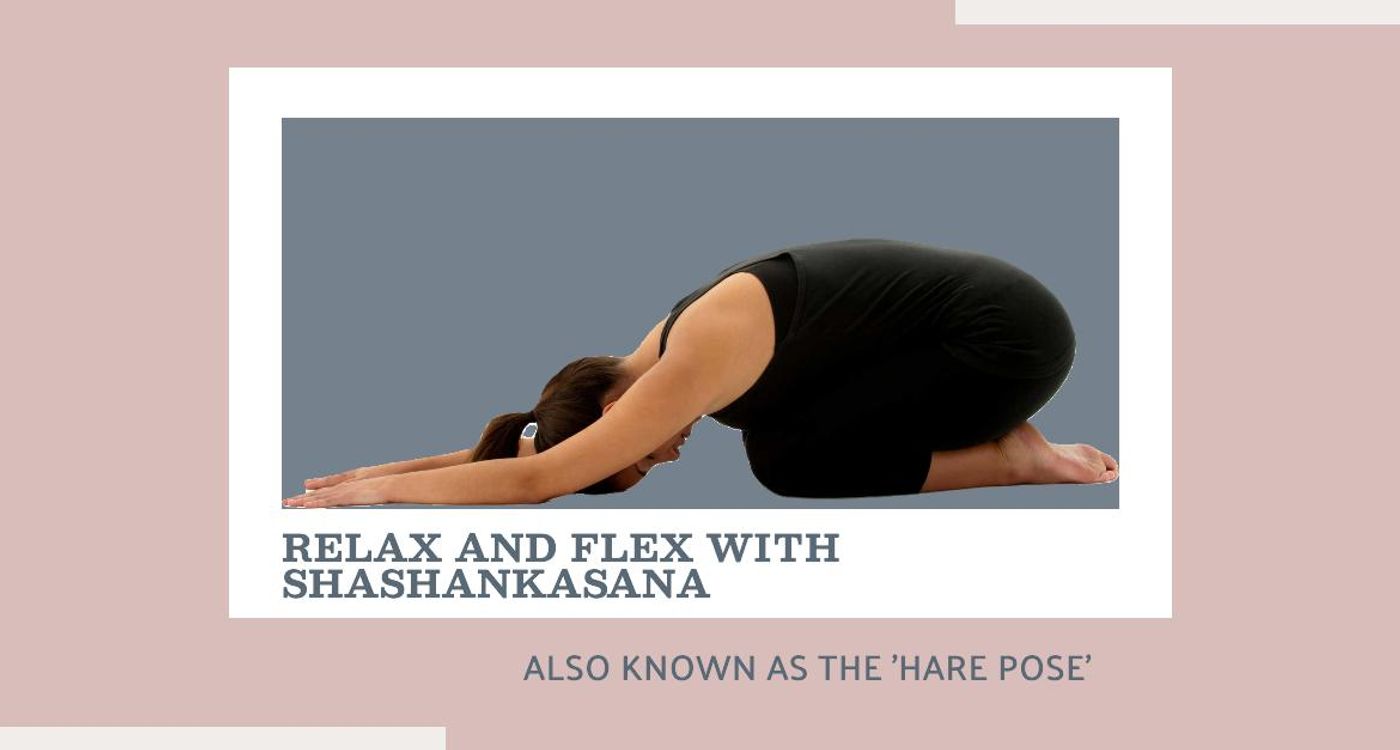
Shashankasana (Moon / Rabbit Pose) is a deeply restorative kneeling forward fold that cools the nervous system, soothes the adrenals, and activates the grounding Root Chakra.
The hare knows when to be still. In stillness, the moon rises.
Shashankasana — Moon Pose / Rabbit Pose — is a beginner-level yoga posture that is a kneeling forward fold — seated in Vajrasana, then folding the torso forward until the forehead rests on the earth — offering the deeply restorative qualities of the moon: cooling, introspective, and nourishing.
Shashanka means 'hare' or 'moon' in Sanskrit, and this pose carries both meanings: the folded body resembles a hare resting on the ground, and the cooling, receptive quality of the moon pervades the practice. It is used throughout the yoga day — as a rest between active postures, a preparation for meditation, a counter-pose to backbends, and a stand-alone practice for tension relief. Its simplicity is its genius: the entire spine is gently elongated, the adrenal glands are soothed, and the nervous system shifts immediately toward parasympathetic calm.
How to Practise Shashankasana: Step-by-Step Guide
Begin in Vajrasana (Thunderbolt Pose) — kneeling with hips on heels. Follow these steps with mindful breath:
- Sit in Vajrasana. Inhale and lengthen the spine.
- Exhale and fold the torso forward — extending the arms overhead along the floor or alongside the body.
- Rest the forehead on the mat. If the forehead does not reach, use a folded blanket or block.
- Soften the entire upper body: shoulders, neck, arms, and jaw.
- Breathe into the back body — feeling the posterior ribs and lumbar expand with each inhalation.
- Hold for 10–20 breaths or 2–5 minutes.
- To exit: inhale and slowly walk the hands back, rising vertebra by vertebra to Vajrasana.
Physical Benefits of Shashankasana
- Stretches the entire posterior chain: lumbar, thoracic, and cervical spine.
- Massages and stimulates the abdominal organs through the folded compression.
- Relieves adrenal fatigue — the prone stretch of the mid-back soothes the adrenal glands.
- Calms the nervous system through the forward-fold, head-down parasympathetic response.
- Decompresses the intervertebral discs — particularly beneficial after standing or backbend practice.
Mental & Emotional Benefits
- The quality of the moon — cool, reflective, and nourishing — pervades this pose: it directly counters agitation and mental heat.
- Activates the Muladhara (Root) Chakra through the close proximity of the body to the earth.
- A posture of humility and surrender — the forehead touching the earth is a gesture of letting go.
- Used as a transition into yoga Nidra or meditation, it creates the necessary inner quiet.
Energetic Benefits: 🔴 Muladhara (Root) Chakra
Shashankasana is closely associated with the Muladhara (Root) Chakra, the energy centre governing grounding, stability, and embodied safety. Regular practice activates and balances this chakra, bringing its qualities more fully into daily life. To deepen your understanding of this chakra and its influence on your wellbeing, explore our beautiful Muladhara Poster — a visual anchor for meditation and a reminder of the energy you are cultivating through your practice.
For the complete chakra map and a guide to balancing all seven energy centres, see our Yoga Asanas for the 7 Chakras guide and our Complete 7-Chakra Interactive Chart.
Modifications & Variations
- Place a folded blanket between the thighs and calves if sitting on the heels is uncomfortable.
- Rest the forehead on a block or bolster if it does not reach the floor.
- Allow the arms to rest alongside the body (palms up) for a deeper surrender.
- For a wider, more hip-open version: spread the knees wide and let the big toes touch.
Contraindications & Safety Guidelines
- Knee injury: place a thick folded blanket between the thighs and calves for support.
- Ankle pain: roll a blanket under the ankles for cushioning.
- Pregnancy: widen the knees to make room for the abdomen.
- Vertigo or glaucoma: keep the head in neutral or slightly elevated position.
Science & Research
Research on restorative yoga postures confirms that passive forward folds significantly reduce cortisol and salivary alpha-amylase (a stress biomarker), and activate the parasympathetic nervous system within 2–3 minutes of holding. The adrenal gland stimulation noted in Shashankasana is supported by anatomy — the kidneys and adrenals sit directly at the level of the L1–L2 vertebrae, exactly where the pose creates its deepest stretch.
Related Poses & Practice Resources
Deepen your practice with these related resources: Balasana (Child's Pose) | Vajrasana (Thunderbolt Pose) | Savasana | Makarasana (Crocodile)
Support your yoga practice with our Mega Bundle Chakra Harmony Collection — all 7 chakra posters and guides in one beautiful set — and our Seven Chakra Affirmation Pack to reinforce the energetic shifts your practice creates.
Frequently Asked Questions
Is Shashankasana the same as Balasana (Child's Pose)?
They are very similar. Balasana is typically practised from a wide-knee position. Shashankasana is classically practised in Vajrasana with knees together — creating a different abdominal compression and spinal stretch.
Can I practise Shashankasana after eating?
It is best to wait at least 90 minutes after a full meal, as the forward fold creates abdominal compression. After a light meal, 30 minutes is sufficient.
Why is it called the Moon Pose?
The Sanskrit word shashanka carries both 'hare' (as in the hare in the moon) and 'moon' meanings. The cooling, reflective, and nourishing qualities of the pose mirror the moon's energy in yogic tradition.
Touch the earth with your forehead and remember: everything you are already rests upon what supports you.
Written by
Editorial Team