MindfulnessAnxiety in Children: Signs, Causes, and What Actually Helps
Anxiety is the most common mental health concern in children today. Learn to recognise the signs, understand the causes, and discover what genuinely helps.
Reflections, teachings, and practical wisdom on mindfulness, yoga, Advaita Vedanta, and the direct recognition of nondual awareness.
MindfulnessAnxiety is the most common mental health concern in children today. Learn to recognise the signs, understand the causes, and discover what genuinely helps.
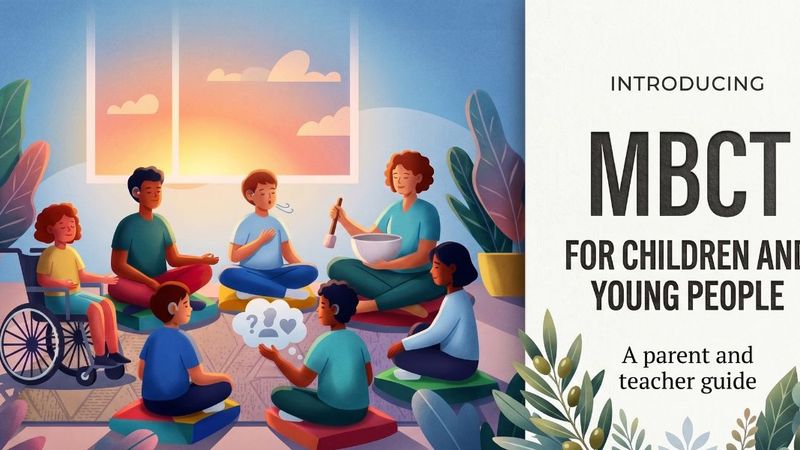
MindfulnessHow MBCT (Mindfulness-Based Cognitive Therapy) is adapted for children and adolescents — what the research says, how it works for young people, and where to find it.
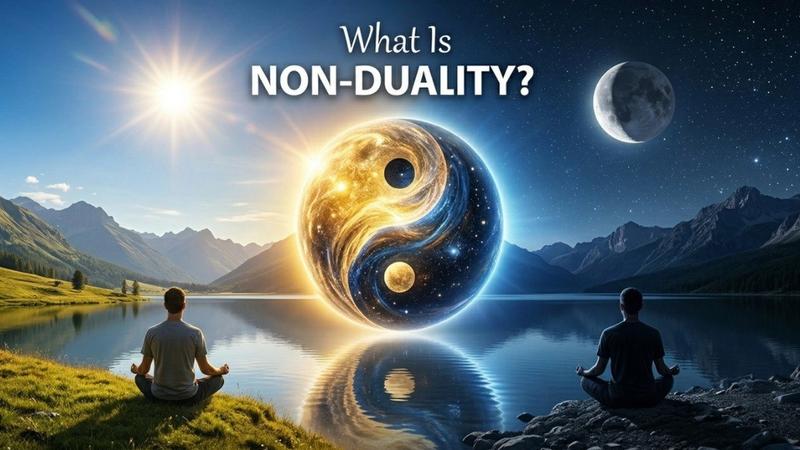
MindfulnessNonduality (Advaita) is the recognition that awareness itself is undivided. A clear guide to what it means, key teachers like Ramana and Nisargadatta, and how it applies to daily life.
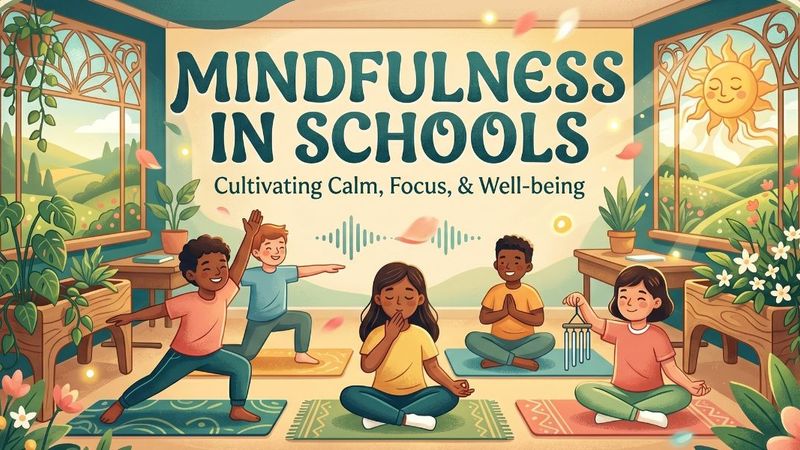
MindfulnessA practical guide to bringing mindfulness into your school — from evidence-based programmes to classroom exercises, age-appropriate approaches, and getting leadership buy-in.
MindfulnessMBCT combines mindfulness and cognitive therapy to treat depression and anxiety. Learn how it works, the 8-week programme, and how it differs from CBT and standard mindfulness.
MindfulnessThe definitive reading list for nondual awareness — from Ramana Maharshi's self-inquiry to Rupert Spira's contemporary teaching, organised by level and teacher.
Non-dualityNondual teachings point to one recognition: that awareness is not inside the body looking out. Everything else follows from that.
MindfulnessA complete guide to nondual philosophy — Advaita Vedanta, Shankaracharya, the mahavakyas, core concepts like Brahman and Maya, and how nonduality appears across traditions.
Non-dualityA nondual experience is not the goal — integration is. Glimpses of borderless awareness are invitations, not destinations.
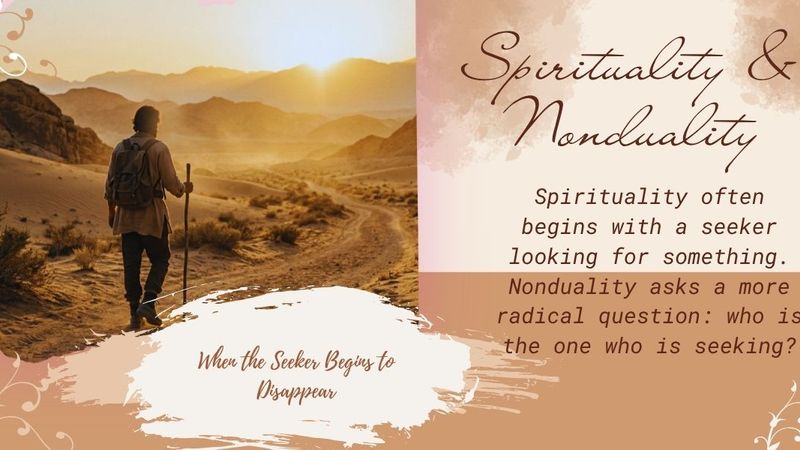
Non-dualitySpirituality often begins with a seeker looking for something. Nonduality asks a more radical question: who is the one who is seeking?
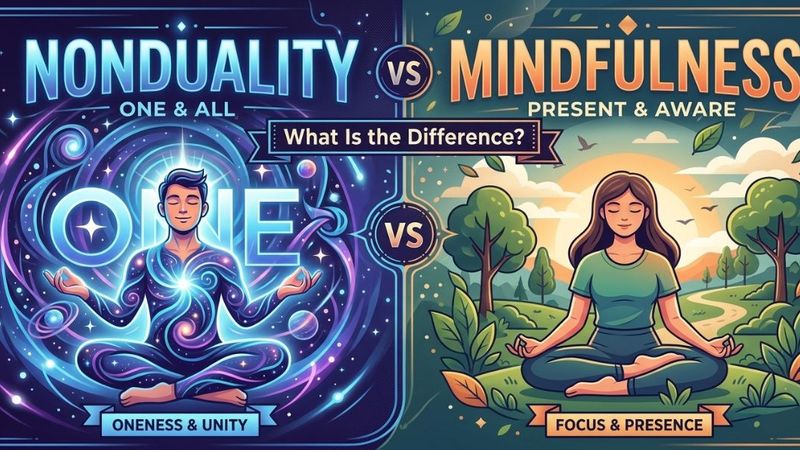
MindfulnessMindfulness teaches you to observe your thoughts. Nonduality asks who the observer is. A clear guide to what separates these two approaches — and where they meet.
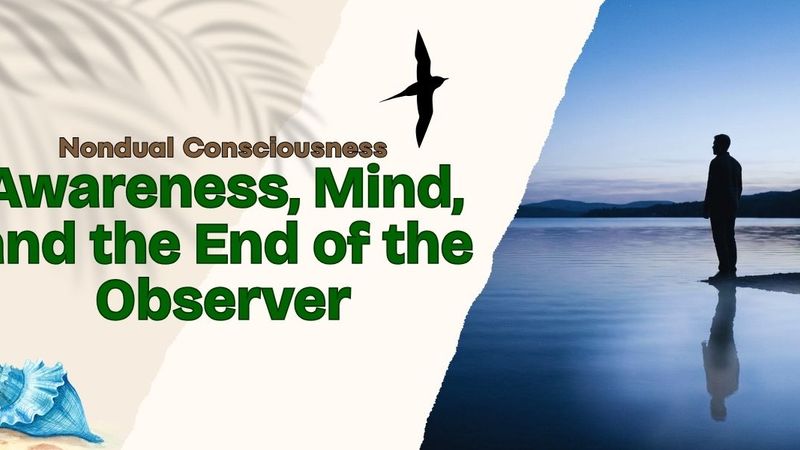
Non-dualityNondual consciousness is not a higher state — it is the recognition that ordinary awareness has no edges, no centre, and no separation from what it knows.
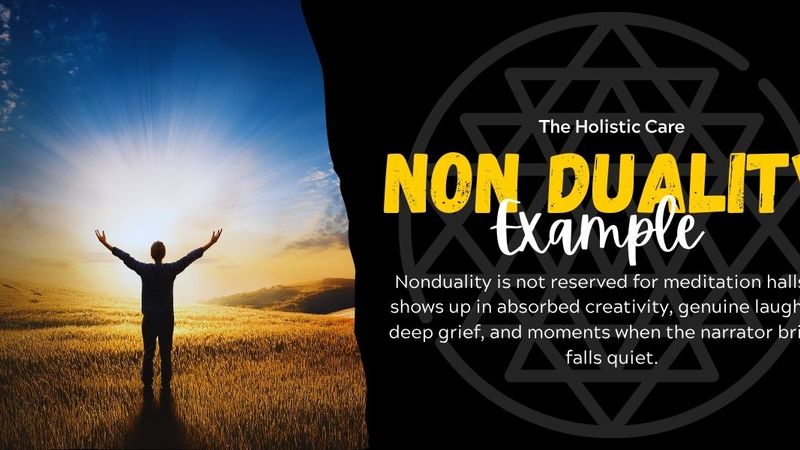
Non-dualityNonduality is not reserved for meditation halls. It shows up in absorbed creativity, genuine laughter, deep grief, and moments when the narrator briefly falls quiet.
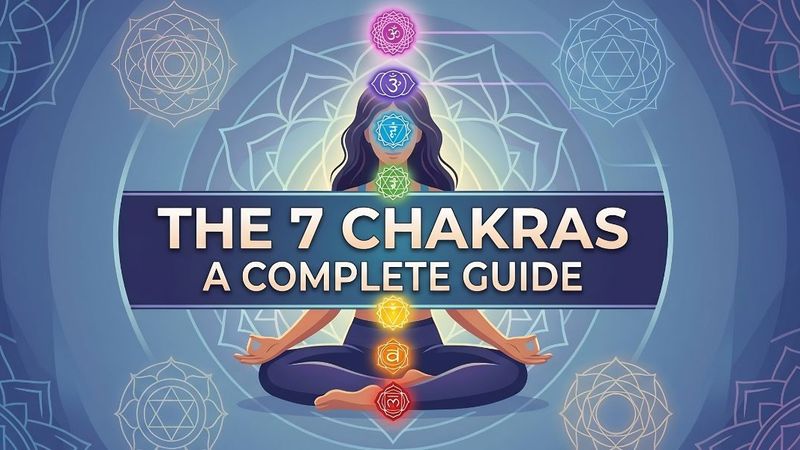
MindfulnessA complete guide to the 7 chakras and the yoga poses that activate each one — from Muladhara (root) to Sahasrara (crown), with Sanskrit names, locations, and practice tips.
Non-dualityNondual awareness is not produced by meditation or teaching. It is what you are before the next thought arrives. The question is only whether it is recognised.
Non-dualityBuddhism approaches nonduality through emptiness and no-self. Advaita Vedanta approaches it through awareness. Both point beyond the illusion of a separate self.
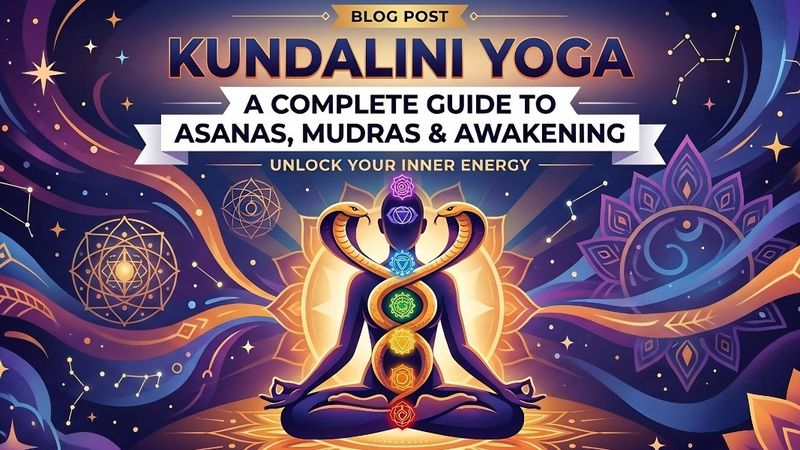
MindfulnessEverything you need to know about Kundalini Yoga — the subtle body, key asanas, mudras, bandhas, pranayama, shatkarmas, and what Kundalini awakening actually means.
Non-dualityNonduality meditation does not produce awareness — it points you back to the awareness you already are. Here is how to practise.
Non-dualityDuality divides. Nonduality reveals the field in which all division appears. Understanding the difference is the beginning of a different way of living.
MindfulnessConscious breathing is the simplest and most accessible mindfulness practice — learn how to use the breath as an anchor for presence, calm and self-regulation throughout the day.