Understand Acupuncture- Acupressure in a clearer holistic context, including what it explores, how it is commonly used, and when thoughtful guidance matters.
Quick Answer: Acupuncture uses fine needles inserted at specific points on the body to influence the flow of qi through channels called meridians. Acupressure applies firm pressure to the same points without needles. Both have a reasonable evidence base for pain management, headaches, anxiety, and nausea. Acupressure can be self-applied for stress relief and connects naturally to yoga and breathwork practice.
Acupuncture and Acupressure: What They Are
Acupuncture is one of the oldest documented medical practices in the world, with roots in classical Chinese medicine dating back at least 2,500 years. It is based on the concept of qi, pronounced "chee," a vital energy or life force that flows through the body along pathways called meridians. When this flow is blocked, deficient, or excessive, illness or discomfort is said to result. Inserting fine needles at specific acupuncture points along the meridians is understood to restore balance and support the body's natural healing processes.
Acupressure applies the same theoretical framework but uses sustained manual pressure rather than needles. This makes it more accessible as a self-care tool: many key acupressure points can be located and stimulated by the individual without specialist training. Reflexology, shiatsu, and some forms of Thai massage draw on related principles.
From a biomedical perspective, the mechanisms of acupuncture are not fully understood but are likely to involve several overlapping processes: stimulation of A-delta and C nerve fibres, release of endogenous opioids and other neuromodulators, localised effects on connective tissue and fascia, and modulation of the autonomic nervous system. The meridian concept does not map neatly onto anatomy as understood in Western medicine, but this does not necessarily mean the practical effects are absent.
What Research Shows: Pain, Headaches, Anxiety and Fertility
The evidence base for acupuncture is strongest for pain management. Multiple Cochrane reviews and meta-analyses have found that acupuncture produces statistically significant reductions in chronic low back pain, neck pain, osteoarthritis, and headache compared with sham acupuncture or no treatment. The effect sizes are modest but clinically relevant, particularly for patients who have not responded well to conventional approaches.
For tension-type headaches and migraines, acupuncture is now included in clinical guidelines in several countries as a valid preventive treatment. For anxiety, several randomised controlled trials show reductions in self-reported anxiety symptoms and measurable reductions in cortisol levels following a course of treatment, though the evidence is less consistent than for pain.
The use of acupuncture in fertility treatment is an area of ongoing research and considerable commercial interest. Some studies suggest benefits for women undergoing IVF, particularly in improving uterine blood flow and reducing stress-related hormonal disruption. However, the evidence is not yet strong enough to recommend acupuncture as a standard component of fertility treatment, and findings across studies are mixed.
Common Acupressure Points and Their Uses
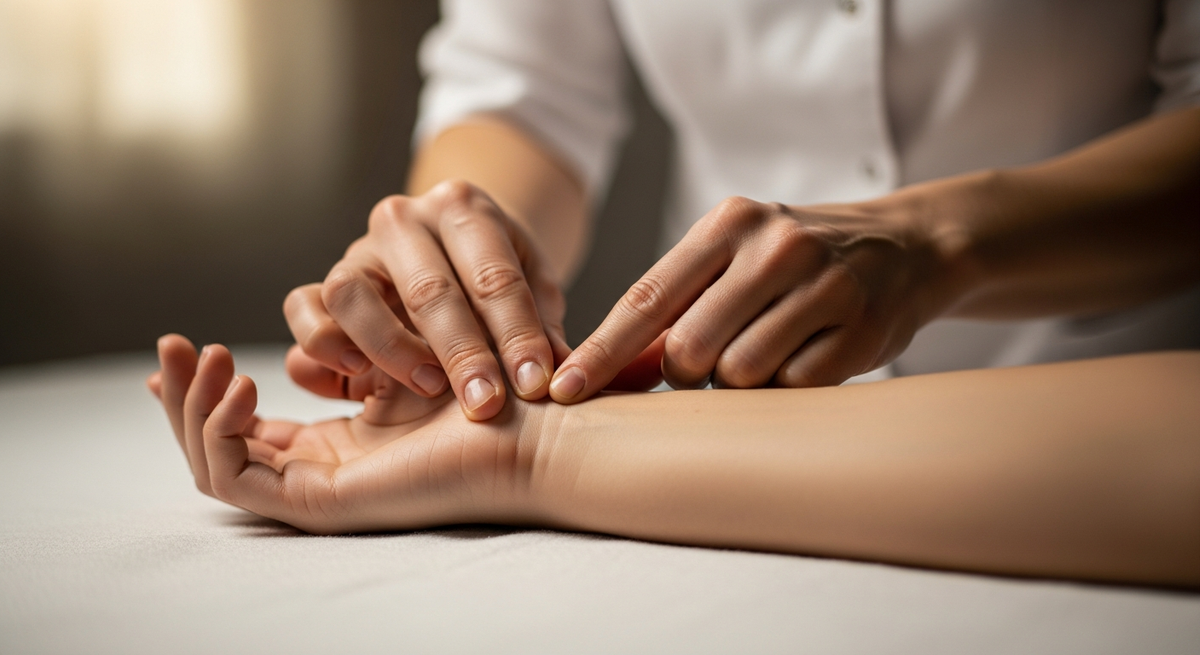
Hegu, also known as Large Intestine 4, is located in the webbing between the thumb and index finger. It is one of the most commonly used acupressure points and is associated with pain relief, particularly headaches, as well as stress reduction. Apply firm circular pressure for 30 to 60 seconds on each hand.
Neiguan, or Pericardium 6, is located on the inner wrist, approximately two finger-widths above the wrist crease between the two central tendons. It is well known for reducing nausea and is the basis for the pressure point wristbands used for motion sickness and morning sickness. It is also used for anxiety and palpitations.
Yintang is located at the midpoint between the eyebrows, an area sometimes called the third eye in yoga and meditation traditions. Gentle circular pressure or sustained hold at this point is used for calming the nervous system and reducing anxiety. It is a useful point to use during breathwork or at the beginning of a meditation practice to settle the attention.
Kidney 1, located at the centre of the sole of the foot just below the ball of the foot, is used in acupressure for grounding, anxiety, and insomnia. Stimulating this point can help bring scattered or anxious attention downward into the body, which is complementary to many yoga and meditation practices focused on grounding.
Acupressure, Yoga and Self-Care
Acupressure and yoga share a common theoretical heritage in the broader family of Asian medicine and contemplative traditions. The concept of prana in yoga and qi in Chinese medicine are related though not identical: both describe a vital animating force that flows through the body and can be cultivated, directed, or blocked. Both traditions developed practices designed to work with this force for health and for states of expanded awareness.
Practically speaking, acupressure integrates well into a yoga or meditation practice. Stimulating Yintang before sitting meditation is a simple way to settle the attention. Using Kidney 1 during Savasana supports the grounding and integration that restorative postures are intended to produce. Working with Neiguan during pranayama can support the shift into a more relaxed physiological state.
Self-acupressure requires no equipment and can be done anywhere. The main principles are: locate the point accurately, apply firm but not painful pressure, hold or move in small circles for 30 to 60 seconds, and breathe steadily throughout. Sensations of dull ache, warmth, or tingling at the point are considered normal and indicate contact with the point. Sharp or burning pain suggests the pressure is too strong or the location is slightly off.
When to See a Qualified Acupuncturist
Self-acupressure is a reasonable first step for minor stress, headaches, and nausea. For chronic conditions, persistent pain, or complex health situations, a qualified practitioner offers a level of assessment and precision that self-treatment cannot replicate. A trained acupuncturist will take a detailed case history, assess tongue and pulse according to classical Chinese diagnostic methods, and develop a treatment plan tailored to your particular pattern of imbalance.
When looking for a practitioner, check for registration with the appropriate professional body in your country. In the UK, the British Acupuncture Council requires members to hold a degree-level qualification and adhere to a code of practice. In Australia, the Chinese Medicine Board of Australia regulates acupuncture practitioners. Physiotherapists and medical doctors may also offer dry needling, which uses acupuncture needles but within a biomedical framework rather than classical Chinese medicine.
Acupuncture is generally very safe when performed by a trained practitioner using sterile single-use needles. Serious adverse events are rare. Minor side effects such as slight bruising, temporary soreness at needle sites, or brief lightheadedness are occasionally reported. People on blood-thinning medication or with clotting disorders should inform their practitioner before treatment.
Safety, Evidence and Practitioner Choice
Acupuncture should be performed by a trained, licensed, or appropriately regulated practitioner using sterile single-use needles. The practitioner should ask about pregnancy, blood thinners, bleeding disorders, pacemakers or implanted devices if electroacupuncture is used, immune suppression, skin infection, fainting history, and the medical diagnosis behind the symptom being treated.
The strongest conventional use of acupuncture is usually supportive symptom management, especially for some pain conditions and treatment-related nausea. It should not be sold as a cure for serious disease. If pain is severe, new, linked with injury, accompanied by weakness or numbness, or associated with fever, chest pain, unexplained weight loss, or neurological changes, medical assessment comes first.
Acupressure is gentler and can be useful for self-care, but it still needs common sense. Avoid pressing over wounds, swollen tissue, fractures, varicose veins, or painful inflamed areas. During pregnancy, some points are traditionally avoided, so prenatal use should be guided by someone qualified.
Featured Programme
The I AM Programme
A structured course in nondual mindfulness for adults exploring awareness, the body, and inner stillness
Explore the ProgrammeTeaching Note from Shital Chute
When I first started writing about acupuncture and acupressure for our readers, what struck me most was how many people confuse the two or assume acupuncture is somehow mystical rather than a structured practice with centuries of documented use. What resonates with our audience, from the messages we get, is the reassurance that acupressure is something they can try safely at home, on their own wrists or temples, without needing a practitioner or a needle. I think that accessibility is the real bridge point for beginners, acupressure becomes the low stakes entry that makes acupuncture feel less intimidating later. My role isn't to tell people this replaces their doctor. It's to help them understand what these practices actually involve, so they can have an informed conversation with a qualified practitioner or their physician before deciding if it's right for them.
Frequently Asked Questions
Does acupuncture hurt?
Most people describe acupuncture as causing minimal discomfort, if any, since the needles used are extremely thin and inserted just under the skin. Some people feel a brief tingling, warmth, or dull ache at the point of insertion. A qualified, licensed practitioner should be the one performing the treatment to keep it safe and comfortable.
What is the difference between acupuncture and acupressure?
Acupuncture uses thin needles inserted into specific points on the body, while acupressure uses finger or hand pressure on those same points without breaking the skin. Acupressure is generally something you can learn to do on yourself at home, while acupuncture requires a trained practitioner.
Can acupuncture cure a medical condition?
Acupuncture and acupressure are traditionally used as complementary approaches to support relaxation and general wellbeing, not as a replacement for medical treatment. If you have a diagnosed medical condition, please consult your doctor and treat these practices as a possible addition to, not a substitute for, medical care.
Is acupressure safe to try at home?
For most healthy adults, gently pressing on common acupressure points such as the web between the thumb and index finger is considered low risk. If you are pregnant, have a chronic health condition, or are unsure, it is best to check with a doctor or a trained practitioner first.
How many acupuncture sessions does it typically take to notice something?
This varies widely from person to person and depends on what someone is hoping to address. Some people report noticing a sense of relaxation after a single session, while others work with a practitioner over several sessions. A licensed acupuncturist can give a more personalized expectation during a consultation.
From Our Glossary
Free Guide for Parents & Educators
Mini Mindfulness Masters
Simple practices to help children slow down, feel calm, and become more present. A free download, straight to your inbox.
No spam, ever. Unsubscribe at any time.

Written by
Shital ChuteMarketing Lead, The Holistic Care | Mindfulness & Behavioral Health Educator
Shital Chute leads Marketing at The Holistic Care, where she shapes how the platform's mindfulness courses, books and free resources reach the families, schools and workplaces who need them. Alongside this role, she is a passionate advocate and educator for mindfulness and behavioral health, drawing on that perspective to help shape content that is genuinely useful, not just promotional.
Her work at The Holistic Care sits at the intersection of communication and care: translating research-backed mindfulness practices into clear, practical guidance for parents, teachers and adults navigating everyday stress.


