Ashtanga Vinyasa and Power Yoga are vigorous, breath-linked styles that build strength while cultivating one-pointed focus.
Among the many styles of yoga practised in the modern West, Ashtanga Vinyasa and its derivative Power Yoga represent the most athletically demanding end of the spectrum. Both are vigorous, strength-building, physically challenging practices that produce genuine fitness benefits alongside the mindfulness and stress-reduction effects common to all yoga styles. Both are also, at their best, profound moving meditations — practices that use the demand of physical challenge to develop the one-pointed attention and equanimity of classical yoga.
Understanding the distinctions between these two styles: their origins, their structures, their intentions and their appropriate uses — allows practitioners to make informed choices about which to pursue and how to integrate either into a sustainable long-term practice.
Ashtanga Vinyasa Yoga: Origins and Structure
Ashtanga Vinyasa yoga was developed by Sri K. Pattabhi Jois in Mysore, India, where he taught it from 1948 until his death in 2009. Jois claimed the practice was derived from an ancient text, the Yoga Korunta, though the historical authenticity of this claim has been debated. What is not debated is the power and coherence of the system Jois developed, a rigorously structured practice that has produced some of the most dedicated and physically accomplished yoga practitioners in the modern world.
The Ashtanga system consists of six series, each a fixed sequence of postures practised in the same order in every session. Most practitioners work with the Primary Series (Yoga Chikitsa — yoga therapy) for months or years before advancing to the Intermediate Series (Nadi Shodhana: nerve purification). Advanced Series A–D are practised by a very small number of advanced practitioners worldwide. The fixed sequence is intentional: by removing the variables of sequencing, the practitioner can focus entirely on breath, bandha (internal energy locks) and drishti (gaze point) — the three pillars of the Ashtanga method collectively known as "tristhana."
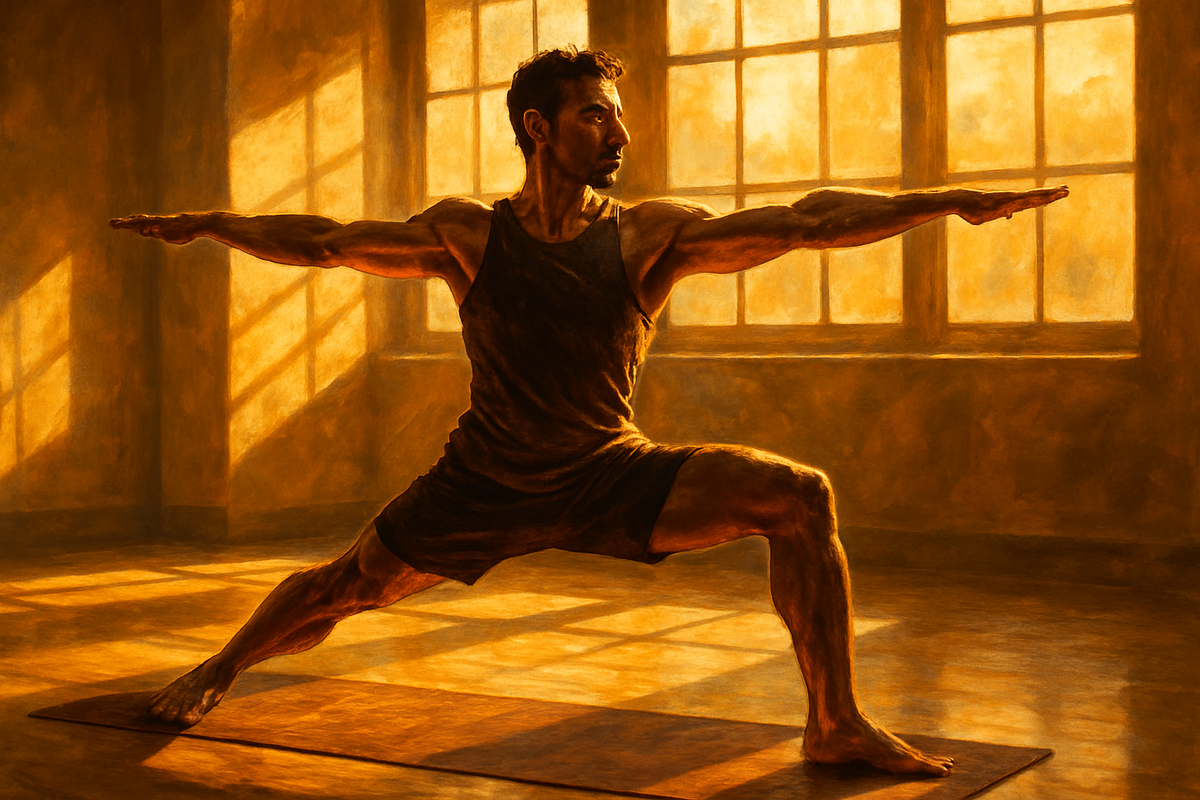
The Mysore Method
Traditional Ashtanga is practised in the "Mysore style", a self-practice format where each student practises their own part of the sequence at their own pace in a shared room, with the teacher moving among students to offer adjustments and guidance. This is in contrast to "led" Ashtanga classes where a teacher calls the sequence for a group. Mysore practice is considered the authentic method: it develops self-sufficiency, allows individualised progression, and produces a quality of internal focus impossible in a led class format.
Six days per week is the traditional Ashtanga practice schedule: with Saturdays, new moon days and full moon days as rest days. This regularity is considered essential to the method. The body and nervous system adapt to daily practice in ways that occasional practice cannot produce. Most Western practitioners adapt to a 3–5 day per week schedule, which produces significant but less rapid development.
Power Yoga: Origins and Distinctions
Power yoga emerged in the mid-1990s as a Western adaptation of Ashtanga Vinyasa, developed independently by Beryl Bender Birch and Bryan Kest (both students of Ashtanga teacher Norman Allen). Unlike Ashtanga, Power Yoga does not follow a fixed sequence: teachers design classes freely, drawing on the vinyasa linking method and the physical intensity of Ashtanga but without the rigidity of the series structure.
This flexibility made Power Yoga more accessible to Western fitness culture and contributed to its rapid growth in health clubs and gyms. Baron Baptiste further developed and popularised "Baptiste Power Vinyasa" in the late 1990s, bringing the practice into mainstream fitness culture. Today, "Power Yoga" is often used interchangeably with "Vinyasa Yoga" in studio marketing, though strictly speaking the styles have distinct characteristics.
Ashtanga vs Power Yoga: Key Differences
| Feature | Ashtanga Vinyasa | Power Yoga |
|---|---|---|
| Sequence | Fixed — same order every practice | Variable — teacher designs each class |
| Tradition | Classical — Mysore lineage via Pattabhi Jois | Western: adapted from Ashtanga in 1990s |
| Learning style | Self-practice (Mysore method) or led class | Led class format (gym or studio) |
| Memorisation | Sequence memorised over time | No memorisation required |
| Depth of study | Deep mastery of one system over years | Breadth and variety across classes |
| Spiritual framework | Explicit — eight limbs, Sanskrit, traditional ritual | Typically secular — fitness-oriented framing |
| Accessibility | Requires commitment; can be intimidating | More accessible; higher variety |
Physical Benefits
Both styles produce significant physical benefits that rival conventional fitness training. Strength gains are substantial: particularly in the upper body, core and legs. The chaturanga (low push-up position) sequence practised repeatedly in both styles is one of the most effective bodyweight upper body strength developers available. A regular Ashtanga or Power Yoga practice produces functional strength, postural improvement and cardiovascular fitness simultaneously, a combination that few exercise modalities match.
A 2015 study by Tran et al. found that 8 weeks of Power Yoga practice produced significant improvements in muscular strength, muscular endurance and flexibility comparable to conventional resistance training. Research on Ashtanga specifically (Mody, 2011) found significant improvements in core strength, flexibility and balance after 12 weeks. Both styles also show consistent reductions in perceived stress, anxiety and depression — effects that pure fitness training does not reliably produce.
The Meditative Dimension
At their most authentic, both Ashtanga and Power Yoga are moving meditations rather than mere fitness practices. The physical demand — when approached with the right intention: becomes a vehicle for developing concentration, equanimity and self-knowledge. The body's limits, discomfort and resistance become teachers. The breath, when maintained steadily through physical challenge, becomes an anchor to the present moment that functions identically to the breath in seated meditation.
Many practitioners find that a vigorous physical practice like Ashtanga or Power Yoga is their most reliable entry into meditative states: more accessible than sitting still, because the physical engagement occupies the restless dimension of the mind and allows deeper layers to settle. This is precisely why the yoga tradition developed the physical practices: as preparation for the subtler practices of pranayama and meditation.
Balancing Yang with Yin
One of the most important insights for serious Ashtanga and Power Yoga practitioners is the value of complementary yin practice. The yang intensity of vigorous vinyasa — when practised without counterbalance: can produce overuse injuries, adrenal fatigue and a hyperactivated nervous system that becomes chronic. Yin yoga, restorative yoga and Yoga Nidra provide the necessary counterbalance: releasing the connective tissue stressed by repetitive yang movement, resetting the nervous system, and developing the receptive, yielding qualities that the tradition values equally with strength and discipline.
The most complete yoga practitioners typically combine a vigorous yang practice with a restorative yin practice — not in the same session, but across the week. A sustainable long-term practice always integrates both dimensions.
Featured Programme
The I AM Programme
A structured programme integrating yoga philosophy, mindfulness and nondual inquiry, taking the physical practice deeper into self-understanding and awareness.
Explore the ProgrammeFrequently Asked Questions
Is Ashtanga yoga suitable for beginners?
Traditional Ashtanga is challenging for beginners: the Primary Series contains many demanding poses that require significant strength and flexibility to approach safely. However, a good Mysore-style class is actually highly adaptable: the teacher meets each student where they are and gives only what is appropriate. Many students practise only the standing sequence for months before advancing. The key is finding a qualified teacher rather than attempting the full series from video alone.
How does Power Yoga compare to HIIT for fitness?
Power Yoga produces cardiovascular and strength benefits comparable to moderate-intensity interval training, with the additional benefits of flexibility, balance, breath training and stress reduction that HIIT does not provide. It is somewhat less effective for maximum cardiovascular conditioning than high-intensity interval training but more comprehensive in its overall effects. For people seeking both fitness and mental wellbeing benefits, Power Yoga offers better value.
Can I practise Ashtanga if I have lower back problems?
With care and a qualified teacher's guidance, yes. The Primary Series includes forward folds and spinal twists that need modification for acute lower back conditions. Many students with chronic lower back issues find that regular Ashtanga practice — properly taught — significantly improves their condition through core strengthening and postural correction. The key is working with a teacher who can identify appropriate modifications rather than practising from a book or video.
Free Guide for Parents & Educators
Mini Mindfulness Masters
Simple practices to help children slow down, feel calm, and become more present. A free download, straight to your inbox.
No spam, ever. Unsubscribe at any time.

Written by
Shital ChuteMarketing Lead, The Holistic Care | Mindfulness & Behavioral Health Educator
Shital Chute leads Marketing at The Holistic Care, where she shapes how the platform's mindfulness courses, books and free resources reach the families, schools and workplaces who need them. Alongside this role, she is a passionate advocate and educator for mindfulness and behavioral health, drawing on that perspective to help shape content that is genuinely useful, not just promotional.
Her work at The Holistic Care sits at the intersection of communication and care: translating research-backed mindfulness practices into clear, practical guidance for parents, teachers and adults navigating everyday stress.


