Bikram Yoga (Bikram Parmar), also known as Hot Yoga, is a style of yoga developed by Bikram Choudhury and a Los Angeles, California based company.
Bikram and Hot Yoga: The Practice in the Heat
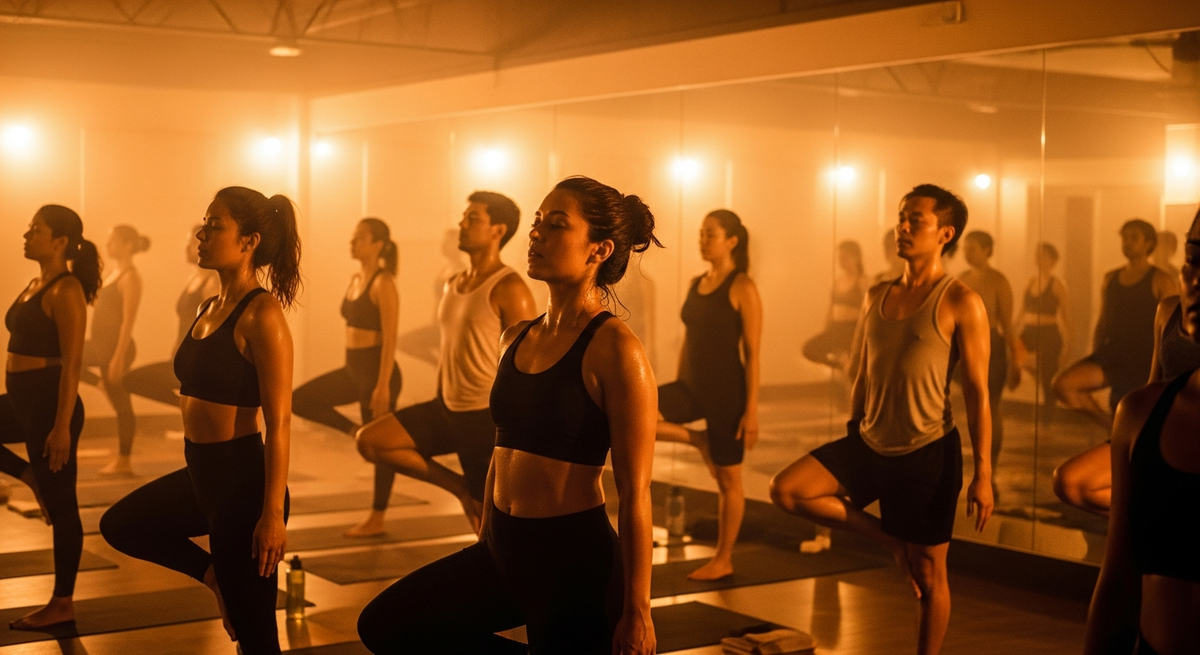
Hot yoga classes are now found in studios around the world, but the specific practice of Bikram yoga, from which most hot yoga traditions descend, has a precise structure: 26 postures and 2 breathing exercises, practised in a room heated to approximately 40 degrees Celsius with 40 percent humidity, over 90 minutes. Every class follows the same sequence. The same dialogue is used by the teacher. The structure is identical whether you are in London, New York or Tokyo.
This rigidity was by design. Bikram Choudhury, who systematised and trademarked the practice in the 1970s, believed that the fixed sequence, combined with the heat, created a specific and reproducible set of physiological conditions for healing and detoxification. His claims were often extravagant, but the practice itself attracted millions of dedicated practitioners and generated a distinct culture within yoga.
The 26 Postures and 2 Breathing Exercises
The sequence opens with Pranayama breathing: standing deep breathing to warm the lungs and calm the nervous system. The asana sequence moves through standing postures, backbends, forward bends and twists, with each posture practised twice. The sequence closes with Kapalbhati breathing: a rapid, forceful exhalation repeated in rounds.
The 26 postures include Half Moon Pose, Awkward Pose (Utkatasana variation), Eagle Pose, Standing Head-to-Knee, Balancing Stick, Triangle, Tree Pose, Toe Stand, Wind-Removing Pose, Sit-up, Cobra, Locust, Full Locust, Bow, Fixed Firm, Half Tortoise, Camel, Rabbit, Head-to-Knee with Stretching, and Spine-Twisting Pose. The floor series is practised on the back and abdomen, providing a strong focus on the spine.
Why the Heat: Research and Reality
The Claimed Benefits of Exercising in Heat
Bikram Choudhury originally claimed the heat allowed the muscles to stretch more safely, flushed toxins through sweat, and created conditions in which the practice could heal chronic injuries and illness. The detoxification claim, while popular in studio marketing, is not supported by physiology: the liver and kidneys handle toxin removal, and sweat contains trace amounts of waste products but is not a meaningful detoxification pathway.
What Research Actually Shows
The research on hot yoga is more nuanced. Studies have found that hot yoga practitioners do not necessarily achieve greater flexibility gains than those practising in normal temperatures, though the perception of ease is greater in heat. Cardiovascular demand is higher in a heated environment: the heart works harder to regulate core temperature, which may provide a mild aerobic benefit. However, the same studies note that this increased demand also raises the risk profile for individuals with cardiovascular conditions.
A 2019 study published in Experimental Physiology found that hot yoga produced similar cardiovascular benefits to moderate-intensity walking, and that the physiological responses were largely a product of the heat rather than the yoga postures themselves. The heat is a real variable, but its benefits are more modest than claimed.
Featured Programme
The I AM Programme
A complete adult mindfulness course integrating body awareness, breath and nondual inquiry.
Learn MoreThe Controversy: Bikram Choudhury and Hot Yoga Today
Bikram Choudhury was the subject of multiple sexual assault and harassment allegations, documented extensively in a 2019 Netflix documentary. He fled the United States in 2017 to avoid civil judgments and criminal proceedings. The Bikram yoga organisation largely collapsed in the aftermath.
The practice itself, however, continues. Many studios that formerly operated as Bikram yoga rebranded as hot yoga, removing the Bikram name while retaining the same or a similar 26-posture sequence. Others developed their own hot yoga formats using different postures and music. The heat remains the defining characteristic, even when the specific Bikram sequence is not used. Instructors trained in the Bikram method continue to teach under their own names or at independent studios.
Further Reading and Programmes
Who Benefits and Who Should Avoid Hot Yoga
Hot yoga can be genuinely useful for practitioners who respond well to heat, who find cold environments a barrier to physical practice, or who are seeking a vigorous and structured workout with a consistent format. The fixed sequence is also appealing to those who want to track their progress in specific postures over time without the variable of a changing class structure.
Those who should approach hot yoga cautiously or avoid it include: anyone with cardiovascular disease, high blood pressure or a history of heat-related illness; pregnant women; anyone prone to dehydration; those with certain neurological conditions that affect heat tolerance; and anyone who has not already established a baseline of cardiovascular fitness. New students should inform the teacher of any health concerns before their first class and should feel free to rest in Child Pose or leave the room if they feel unwell.
Hydration before, during and after class is essential. Electrolyte replacement may also be warranted after repeated classes, as sweat depletes sodium, potassium and magnesium alongside water. With appropriate precautions, many practitioners find hot yoga a satisfying and effective practice. The heat is demanding, but for those who tolerate it well, the intensity has its own appeal.
Teaching Note from Shital Chute
The thing I want people to understand before they walk into a hot yoga room for the first time is that the heat changes everything about how you should approach the practice. In conversations with readers who are curious about trying Bikram or hot yoga, I always come back to the same practical point, this is not the class to push your ego in. I have seen how easy it is to assume that because a room is hot, you should also move harder and faster, when actually the opposite approach, moving slowly and listening closely to your body, matters more here than in a regular temperature class. I think what makes this topic worth covering carefully is that the physical intensity is real, so being upfront about hydration, knowing your own limits, and understanding who should check with a doctor first is just as important as describing the poses themselves.
Frequently Asked Questions
What is the difference between Bikram Yoga and hot yoga in general?
Bikram Yoga is a specific, trademarked sequence of 26 poses and two breathing exercises, always taught in the same order in a room typically heated to around 105 degrees Fahrenheit with high humidity. Hot yoga is a broader term for any yoga class taught in a heated room, which may use a different sequence of poses and a different temperature.
Why is the room heated so much for this style of yoga?
The heat is intended to warm the muscles quickly, which practitioners often say makes stretching feel easier, and it also encourages heavy sweating. The tradeoff is that your body has to work harder to regulate its temperature, so hydration and pacing matter more than in an unheated class.
Is hot yoga safe for everyone?
Hot yoga is not appropriate for everyone, and people who are pregnant, have heart conditions, low blood pressure, or are prone to dizziness or heat intolerance should speak with a doctor before attending a class. If you are new to hot yoga, it is a good idea to check with your doctor if you have any underlying health condition.
How much water should I drink before and during a hot yoga class?
Most instructors recommend drinking water well before class rather than only during it, since your body needs time to be properly hydrated before you start sweating heavily. Sipping water during breaks in class is normal, but drinking large amounts all at once can leave you feeling uncomfortable while moving.
What should I do if I feel dizzy or unwell during a hot yoga class?
Stop moving, sit or lie down on your mat, and rest until the feeling passes. It is always acceptable to step out of a pose or leave the room if you feel unwell, and instructors expect and encourage this rather than seeing it as a failure.
Free Guide for Parents & Educators
Mini Mindfulness Masters
Simple practices to help children slow down, feel calm, and become more present. A free download, straight to your inbox.
No spam, ever. Unsubscribe at any time.

Written by
Shital ChuteMarketing Lead, The Holistic Care | Mindfulness & Behavioral Health Educator
Shital Chute leads Marketing at The Holistic Care, where she shapes how the platform's mindfulness courses, books and free resources reach the families, schools and workplaces who need them. Alongside this role, she is a passionate advocate and educator for mindfulness and behavioral health, drawing on that perspective to help shape content that is genuinely useful, not just promotional.
Her work at The Holistic Care sits at the intersection of communication and care: translating research-backed mindfulness practices into clear, practical guidance for parents, teachers and adults navigating everyday stress.


