
The Niyamas — yoga's five personal observances — are Saucha, Santosha, Tapas, Svadhyaya, and Ishvara Pranidhana. Learn what each means,
The Niyamas: Personal Observances of the Yoga Path
The niyamas are the second limb of Patanjali's ashtanga yoga, described in the Yoga Sutras immediately after the five yamas. Where the yamas govern a practitioner's conduct toward the outer world, the niyamas govern the relationship with oneself: how one maintains the body and mind, how one meets difficulty, how one approaches study and spiritual surrender. The word niyama means observance, rule or duty, and the five niyamas together form a complete code for inner self-governance.
The five niyamas are saucha (purity or cleanliness), santosha (contentment), tapas (austerity or self-discipline), svadhyaya (self-study) and ishvara pranidhana (surrender to a higher principle). Each one addresses a different dimension of the practitioner's inner life, and together they form the psychological and spiritual complement to the ethical framework of the yamas.
Saucha: Purity of Body, Mind and Environment
The Outer Dimension of Saucha
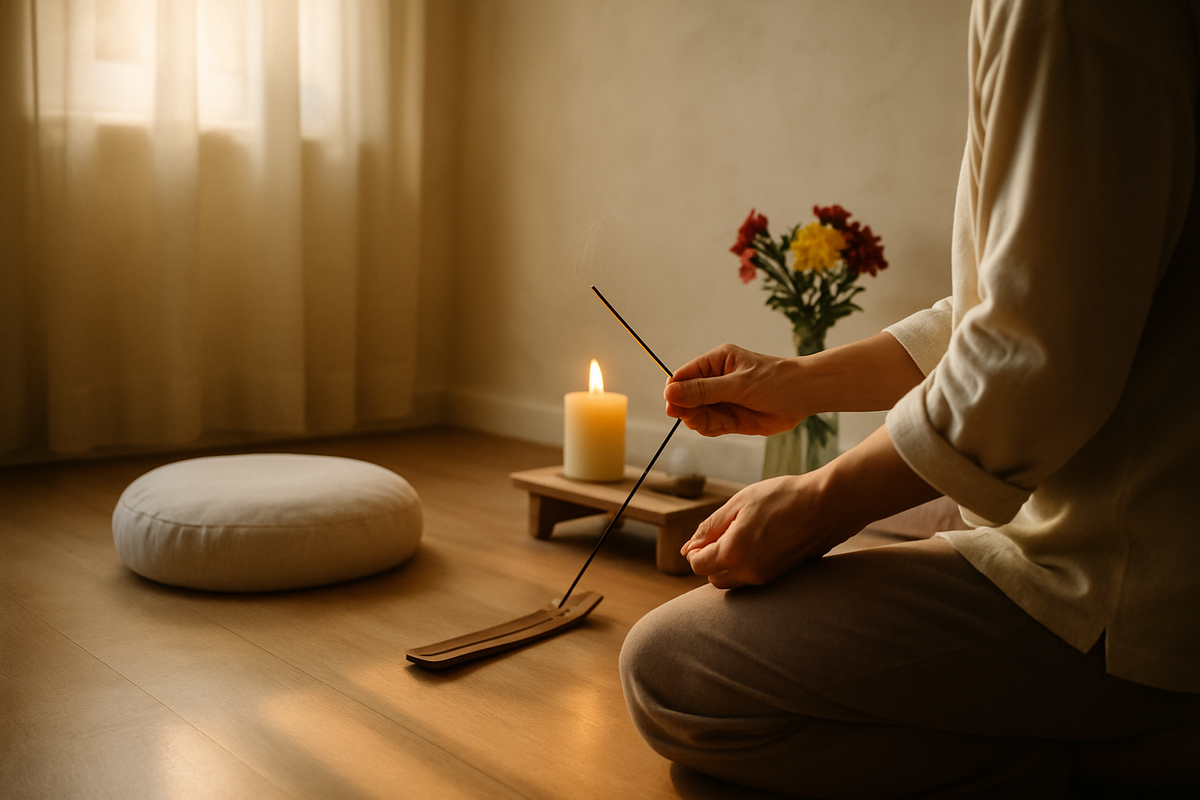
Saucha begins with cleanliness of the body and its immediate environment. In classical yoga, this includes the regular physical purification practices of the shatkarmas (nasal rinsing, tongue scraping, etc.), as well as the maintenance of a clean, orderly living and practice space. The principle is that outer disorder tends to reflect and reinforce inner disorder, and that creating a clean, uncluttered environment supports a clear, uncluttered mind.
Dietary cleanliness also falls under saucha in traditional yoga. Food that is fresh, simply prepared and suited to one's constitution is considered pure; food that is stale, heavily processed, excessively stimulating or obtained through harm to others is considered impure. These are not rigid prohibitions but guidelines for developing a more conscious relationship with what one takes into the body.
The Inner Dimension of Saucha
The inner application of saucha refers to purifying the mental field: the accumulated residue of unprocessed emotions, habitual negative thought patterns and mental impressions (samskaras) that colour perception and drive reactive behaviour. Meditation, pranayama and sincere self-examination are the primary tools for this inner purification. Patanjali notes that as saucha deepens, the practitioner naturally loses interest in excessive contact with external objects and develops a clearer, more self-contained quality of awareness.
Santosha: The Practice of Contentment
Santosha is often translated as contentment, but this can be misread as passive acceptance or indifference. A better understanding is that santosha is the practice of meeting present circumstances without the overlay of craving or aversion, neither fantasising about how things should be different nor compulsively resisting what is. It does not mean that one does not work to change unjust or harmful situations; it means that one acts from a position of inner steadiness rather than anxiety or dissatisfaction.
Patanjali states that from santosha comes supreme happiness, anuttama sukha. This is not the fluctuating happiness of getting what one wants, but the stable, unconditional happiness that arises when the mind is no longer driven by constant wanting and rejecting. This kind of happiness is intrinsic rather than circumstantial, and it is far more reliable than any happiness that depends on favourable external conditions.
In practical terms, santosha is cultivated by noticing the moment when the mind moves into comparison, wishing, or complaint, and gently returning to what is actually present. This is a discipline that requires consistent, patient effort. It does not mean pretending that difficulties do not exist but rather developing the capacity to meet them without being destabilised.
The Complete Eight-Limbed Path
Tapas, Svadhyaya and Ishvara Pranidhana
Tapas: Self-Discipline as Inner Fire
Tapas literally means heat or fire, and in the yoga context it refers to the disciplined effort that generates the inner heat necessary for purification and transformation. Tapas is the quality that gets one onto the meditation cushion on the days when motivation has disappeared, that maintains dietary and behavioural commitments when the mind argues for exceptions, and that sustains practice through the inevitable periods of dryness and difficulty that every sincere practitioner encounters.
Tapas is not self-punishment. Classical yoga distinguishes between sattvic (clear, purifying) tapas and tamasic (dull, destructive) tapas. Forcing the body into extremes of discomfort or denying basic needs in the name of austerity produces dullness and resentment rather than clarity. The quality of tapas Patanjali recommends is firm, consistent and intelligent, a steady commitment to practice that respects the body and mind rather than overriding them.
Svadhyaya: Self-Study and Sacred Study
Svadhyaya has two complementary meanings. The first is study of the self: the practice of honest, non-judgemental self-observation that reveals the patterns, habits and conditioning that shape one's experience. This includes the kind of self-inquiry that meditation naturally generates, as well as more deliberate forms of reflective practice such as journalling or working with a teacher.
The second meaning is the study of sacred texts. In the classical tradition, this means regular reading, memorisation and contemplation of scriptures such as the Yoga Sutras, the Bhagavad Gita or the Upanishads. The purpose is not mere intellectual accumulation but using the teachings as mirrors in which to recognise the truth of one's own experience. Svadhyaya in this sense is the practice of letting wisdom penetrate rather than simply filing it as information.
Ishvara Pranidhana: Surrender to a Higher Principle
Ishvara pranidhana is the fifth niyama and, in many ways, the most challenging for contemporary secular practitioners. Ishvara means the Lord, or more precisely, a special kind of consciousness untouched by affliction, action and its results. Pranidhana means dedication, surrender or offering. Together, ishvara pranidhana means the practice of surrendering the fruits of one's actions to a higher principle.
For practitioners within a theistic tradition, this is relatively straightforward: one dedicates one's actions to God. For those without a theistic framework, the practice can be understood as releasing attachment to outcomes, acting from the deepest values without insisting that circumstances conform to one's preferences, and recognising a larger intelligence at work in one's life beyond the plans of the personal mind. Patanjali states that from ishvara pranidhana alone, samadhi can arise.
Yoga Philosophy and Inner Practice
Contrast with the Yamas: Outer and Inner Ethics
The relationship between the yamas and niyamas is sometimes described as outer and inner ethics, but this framing can be misleading. Both concern the whole of a practitioner's life. A more useful distinction is that the yamas address the question of how one acts in relationship, while the niyamas address the question of how one cultivates and maintains one's own inner conditions. The yamas ask: what quality of presence do I bring to my interactions? The niyamas ask: what quality of inner life am I developing through daily practice?
Together, the yamas and niyamas create a complete ethical and psychological foundation for the inner practices that follow. Without this foundation, asana and meditation tend to be practised as self-improvement projects for the existing ego rather than as genuine paths of transformation. With it, every practice becomes an offering, a form of ongoing self-inquiry and a contribution to the clarity of the world.
Featured Programme
The I AM Programme
An integrated adult programme in nondual mindfulness, self-inquiry and the practical application of classical yoga philosophy.
Explore the ProgrammeIntegrating the Niyamas Into Daily Life
The niyamas are best approached as daily practices rather than distant ideals. Saucha can begin with a clean, dedicated practice space. Santosha can be practised by taking three slow breaths before responding to any situation that triggers dissatisfaction. Tapas shows up in keeping the morning practice commitment even on difficult days. Svadhyaya means reading one page of a wisdom text each morning and sitting with it before moving into the day's activity.
Ishvara pranidhana might be as simple as, at the end of each day, releasing the need for things to have gone differently and offering the day's actions, with all their imperfections, to whatever one holds as the highest good. Over years of sincere practice, these small daily acts accumulate into a fundamentally different relationship with one's own life, one characterised by inner steadiness, self-knowledge and genuine freedom from the tyranny of circumstance.
Teaching Note from Shital Chute
What I find genuinely interesting about the niyamas is how practical they still feel today, even though they come from a text as old as Patanjali's Yoga Sutras. When I talk with people who are new to the philosophical side of yoga, the physical poses usually come first and the ethical framework comes later, almost as a surprise. I think that is backwards in a good way, because concepts like contentment, self study, and surrender translate easily into everyday language once you sit with them, they are not abstract at all. From what I have seen readers respond to, framing the niyamas as five personal observances rather than five rules people must follow perfectly makes this part of yoga philosophy feel accessible rather than intimidating, and that is the angle I always want us to take when writing about the Eight Limbed Path.
Frequently Asked Questions
What exactly are the niyamas?
The niyamas are the second of the eight limbs in Patanjali's Yoga Sutras, and they describe five personal observances or internal disciplines a practitioner is encouraged to cultivate. They include purity, contentment, disciplined effort, self study, and surrender to something greater than oneself.
How are the niyamas different from the yamas?
The yamas are the first limb and focus on how you relate to others and the world around you, such as honesty and non harm. The niyamas are the second limb and turn that attention inward, focusing on your personal habits, discipline, and relationship with yourself.
Do I need to practice all five niyamas perfectly to do yoga correctly?
No, the niyamas are meant as guiding observances to reflect on and grow into over time, not a checklist to master before you are allowed to practice yoga. Most teachers present them as a lifelong area of self reflection rather than a pass or fail standard.
Can someone who is not religious or spiritual still find the niyamas useful?
Yes, many people who do not follow a particular religious tradition find the niyamas useful simply as reflections on self discipline, gratitude, and honest self examination. You do not need to accept every traditional interpretation to find practical value in the underlying ideas.
How can I start incorporating the niyamas into daily life?
A simple starting point is picking one niyama, such as contentment, and noticing moments during your day when you compare yourself to others or feel dissatisfied without a clear reason. Journaling briefly about that noticing, even a few sentences a day, is a common and accessible way beginners start engaging with this part of yoga philosophy.
From Our Glossary
Free Guide for Parents & Educators
Mini Mindfulness Masters
Simple practices to help children slow down, feel calm, and become more present. A free download, straight to your inbox.
No spam, ever. Unsubscribe at any time.

Written by
Shital ChuteMarketing Lead, The Holistic Care | Mindfulness & Behavioral Health Educator
Shital Chute leads Marketing at The Holistic Care, where she shapes how the platform's mindfulness courses, books and free resources reach the families, schools and workplaces who need them. Alongside this role, she is a passionate advocate and educator for mindfulness and behavioral health, drawing on that perspective to help shape content that is genuinely useful, not just promotional.
Her work at The Holistic Care sits at the intersection of communication and care: translating research-backed mindfulness practices into clear, practical guidance for parents, teachers and adults navigating everyday stress.


