Understand Osteopathy in a clearer holistic context, including what it explores, how it is commonly used, and when thoughtful guidance matters.
Quick Answer: Osteopathy is a manual therapy that works with the musculoskeletal system and its relationship to overall health. Osteopaths use hands-on techniques including soft tissue work, joint mobilisation, and manipulation to address pain and restore function. It has good evidence for back pain, neck pain, and headaches, and integrates naturally alongside yoga and mindfulness practice.
What Osteopathy Is: The Whole-Body Framework
Osteopathy was founded by American physician Andrew Taylor Still in the 1870s, who developed the theory that the musculoskeletal system plays a central role in overall health and that structural problems in the body create conditions for disease. The core principle is that structure and function are reciprocally related: if the structure of the body is compromised, function suffers, and if function is impaired, the structure adapts in ways that may cause further problems.
Contemporary osteopathic practice has moved well beyond Still's original formulations while retaining the central focus on the relationship between body structure, movement, and health. A trained osteopath has extensive knowledge of anatomy, physiology, and pathology, and approaches the patient as a whole person rather than as a collection of symptoms. Assessment includes observation of posture, gait, and movement, as well as palpation of soft tissues, joints, and fascial tension throughout the body.
In the UK, Ireland, and Australia, osteopathy is a regulated healthcare profession requiring a four to five year university degree. Osteopaths in these countries are primary contact practitioners, meaning you do not need a referral from a doctor to see one. In other countries, the regulatory status varies and it is worth checking the local registration requirements.
How Osteopaths Differ from Chiropractors and Physiotherapists
All three professions work with musculoskeletal problems, and the differences can be difficult to distinguish from the outside. Chiropractors place primary emphasis on the spine and its relationship to the nervous system, and their most distinctive technique is high-velocity manipulation, sometimes called the adjustment, which produces the characteristic clicking sound. The philosophical basis of chiropractic includes concepts that are not shared by osteopathy or physiotherapy.
Physiotherapists use exercise, movement rehabilitation, electrotherapy, and manual techniques to restore function after injury, surgery, or with chronic conditions. The emphasis is often more on active rehabilitation than on hands-on treatment, and physiotherapy is closely integrated with conventional medical care and sports medicine.
Osteopaths use a broader range of manual techniques than most physiotherapists and typically spend longer on hands-on assessment and treatment. The osteopathic approach gives more weight to the whole-body interconnections of structure and function: how tension in the hip affects the lower back, which affects the shoulders and neck. This systemic assessment can identify contributing factors to pain that a more localised approach might miss.
Conditions Treated and What to Expect in a Session
Osteopathy has its strongest evidence base for low back pain, where multiple systematic reviews and guidelines including those from NICE in the UK support spinal manipulation and mobilisation as effective treatments. Evidence also supports osteopathy for neck pain, shoulder problems, postural pain from prolonged sitting, and tension headaches arising from muscular tension in the neck and shoulders.
Athletes use osteopathy for injury management and prevention. Pregnant women find it helpful for managing the postural and musculoskeletal changes of pregnancy. Older adults benefit from maintenance of mobility and treatment of degenerative joint conditions. In some countries, osteopaths also assess and treat visceral structures, applying gentle techniques to the organs and their supporting tissues, though this area of practice is more controversial in terms of evidence.
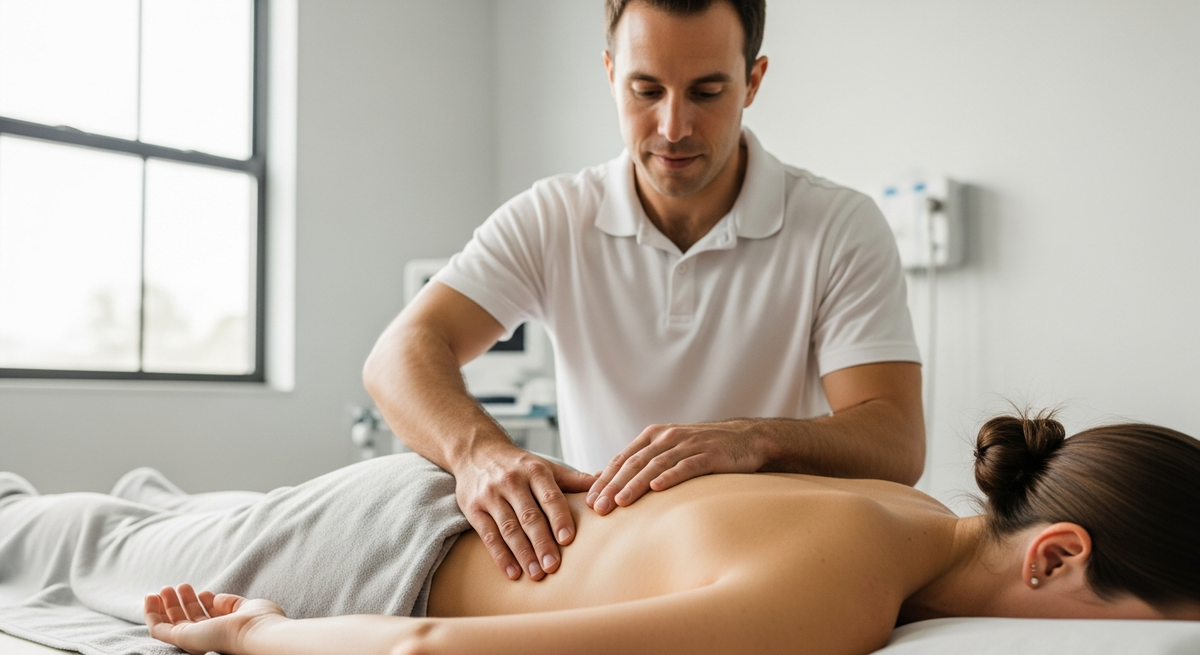
A first appointment typically lasts 45 to 60 minutes and includes a detailed case history covering your presenting complaint, medical history, and lifestyle. The osteopath will observe how you stand, sit, and move, and will palpate through your clothing or with appropriate draping to assess tissue texture, joint mobility, and fascial tension. Treatment begins in the first appointment in most cases.
Techniques used vary from very gentle, barely perceptible movements, particularly in cranial osteopathy or with very acute or fragile patients, through to direct mobilisation and the high-velocity manipulation used for more robust presentations. A good osteopath will explain what they are doing and why, check in about your comfort throughout, and adapt their approach based on your response.
Osteopathy and Yoga: A Natural Complement
Yoga and osteopathy address some overlapping territory from different angles. Both are concerned with the quality of movement through the body, the relationship between posture and ease, and the effect of physical structure and tension on breathing, energy, and mental state. A yoga practitioner dealing with a recurring pain or restriction in a particular area often finds that a few osteopathic sessions, followed by a return to yoga practice, produces a more lasting resolution than either approach alone.
Conversely, osteopaths frequently recommend yoga to patients as a way of maintaining the benefits of treatment and developing the body awareness and postural habits that reduce the likelihood of recurring problems. The combination is particularly effective for postural issues related to desk work, for hip and back problems, and for the accumulated tension that most adults carry in the shoulders, neck, and jaw.
The mindfulness dimension of yoga practice also has an indirect but real benefit for musculoskeletal health. The capacity to notice and respond to early warning signals of tension or misalignment, rather than pushing through until pain becomes serious, is a form of body literacy that both osteopaths and yoga teachers try to cultivate. Learning to inhabit the body with awareness rather than using it as a tool to be ignored until it breaks down is fundamental to both approaches.
Research Evidence and Finding a Qualified Osteopath
The evidence base for osteopathy is strongest for musculoskeletal pain and in the middle ground between very strong and absent for most other applications. This is in part a reflection of the difficulty of conducting large rigorous trials for hands-on treatments, where blinding is essentially impossible. The available evidence is sufficient to support its use as a primary or complementary treatment for the conditions described above, with the caveat that individual practitioners vary considerably in their approach and skill level.
When looking for a practitioner, registration with the relevant regulatory body is the minimum standard. In the UK this is the General Osteopathic Council, in Australia the Osteopathy Board of Australia. Ask about the approach the osteopath uses and whether it suits what you are looking for. Someone with significant chronic pain or a complex medical history will need a different approach than someone seeking maintenance care or sports injury management.
Most people benefit from a course of three to six sessions for a specific problem, followed by return appointments as needed. Osteopathy is not generally a therapy you need to commit to indefinitely: the aim is to resolve or significantly improve the presenting problem and support the conditions for ongoing self-maintenance.
Safety, Regulation and Choosing an Osteopath
Osteopathy is hands-on care, so consent and communication matter. A first visit should include questions about symptoms, medical history, medicines, previous injuries, scans, surgery, pregnancy status, and what kinds of touch or movement feel acceptable. Treatment should be explained before it is done, and the person should be able to pause or stop at any time.
Manual therapy may help some musculoskeletal pain, but it is not appropriate for every symptom. New weakness, numbness, loss of bladder or bowel control, fever, unexplained weight loss, chest pain, major trauma, severe headache, or suspected fracture needs urgent medical assessment rather than routine manual treatment. People with osteoporosis, cancer history, bleeding disorders, blood thinners, or inflammatory disease need modified care.
Regulation varies by country. Choose a practitioner whose training, registration, insurance, and scope of practice are clear. The best osteopathic plan usually includes active self-care as well as treatment: movement, strength, ergonomic changes, breathing, sleep, and follow up with medical or physiotherapy support when progress is not clear.
Featured Programme
The I AM Programme
A structured course in nondual mindfulness for adults exploring awareness, the body and the nature of the self
Explore the ProgrammeTeaching Note from Shital Chute
Osteopathy was a term I had heard but never fully understood before helping shape this article, and I think that puts me in the same position as a lot of our readers. What clarified it for me was learning that osteopathic manual therapy is a recognized healthcare discipline with trained practitioners, not a folk remedy, and that its scope is fairly specific, joints, muscles, and the musculoskeletal system generally. I have seen readers arrive at wellness content like this hoping for a single answer to a complicated health problem, and I think the honest, useful message here is one of complementing rather than replacing conventional care. If you are dealing with a persistent pain issue, a qualified osteopath alongside your regular doctor is a reasonable thing to explore, not a substitute for one. That balance is what I tried to keep central in this piece.
Frequently Asked Questions
What is osteopathy?
Osteopathy is a manual therapy healthcare discipline that focuses on the musculoskeletal system, including joints, muscles, and connective tissue. Trained osteopaths use hands-on techniques such as stretching, gentle pressure, and mobilization to address pain and movement restrictions.
What conditions can osteopathy help with?
Osteopathy is most commonly used for musculoskeletal complaints such as back pain, neck pain, joint stiffness, and some types of headaches. It is generally used as a complementary approach alongside conventional medical care, not as a replacement for it, particularly for conditions outside the musculoskeletal system.
Is osteopathy the same as chiropractic care?
The two fields overlap in that both use manual, hands-on techniques, but they developed from different traditions and often differ in specific methods and training. Someone deciding between them may want to research a practitioner's specific qualifications and approach rather than assuming the terms are interchangeable.
Is osteopathy backed by scientific evidence?
Evidence for osteopathic manual therapy is strongest for certain musculoskeletal issues, such as lower back pain, though research quality and findings vary by condition. As with any manual therapy, it is worth discussing with a doctor, especially for chronic or serious health concerns, rather than relying on it alone.
Do I need a doctor's referral to see an osteopath?
This depends on where you live and the specific practitioner, since regulation and training requirements for osteopaths vary significantly by country. It is reasonable to check a practitioner's credentials and, where relevant, coordinate care with your regular doctor, especially if you have an existing medical condition.
Free Guide for Parents & Educators
Mini Mindfulness Masters
Simple practices to help children slow down, feel calm, and become more present. A free download, straight to your inbox.
No spam, ever. Unsubscribe at any time.

Written by
Shital ChuteMarketing Lead, The Holistic Care | Mindfulness & Behavioral Health Educator
Shital Chute leads Marketing at The Holistic Care, where she shapes how the platform's mindfulness courses, books and free resources reach the families, schools and workplaces who need them. Alongside this role, she is a passionate advocate and educator for mindfulness and behavioral health, drawing on that perspective to help shape content that is genuinely useful, not just promotional.
Her work at The Holistic Care sits at the intersection of communication and care: translating research-backed mindfulness practices into clear, practical guidance for parents, teachers and adults navigating everyday stress.


