Learn the foundations of Sivananda Yoga, why it matters, and how to explore the practice with more awareness, steadiness, and safety.
Sivananda Yoga: A Complete Traditional System
Sivananda yoga is one of the oldest and most established yoga traditions in the Western world. It arrived in the West in the 1950s when Swami Vishnudevananda, a direct disciple of Swami Sivananda of Rishikesh, travelled to Canada at the instruction of his teacher. He established the International Sivananda Yoga Vedanta Centres, which now operate in dozens of countries and have trained tens of thousands of teachers.
The approach is deliberately classical. Rather than innovating or creating sequences tailored to fitness trends, Sivananda yoga preserves the structure and philosophy of the tradition as Swami Sivananda articulated it: yoga as a complete science of healthy living with physical, energetic, mental and spiritual dimensions integrated together.
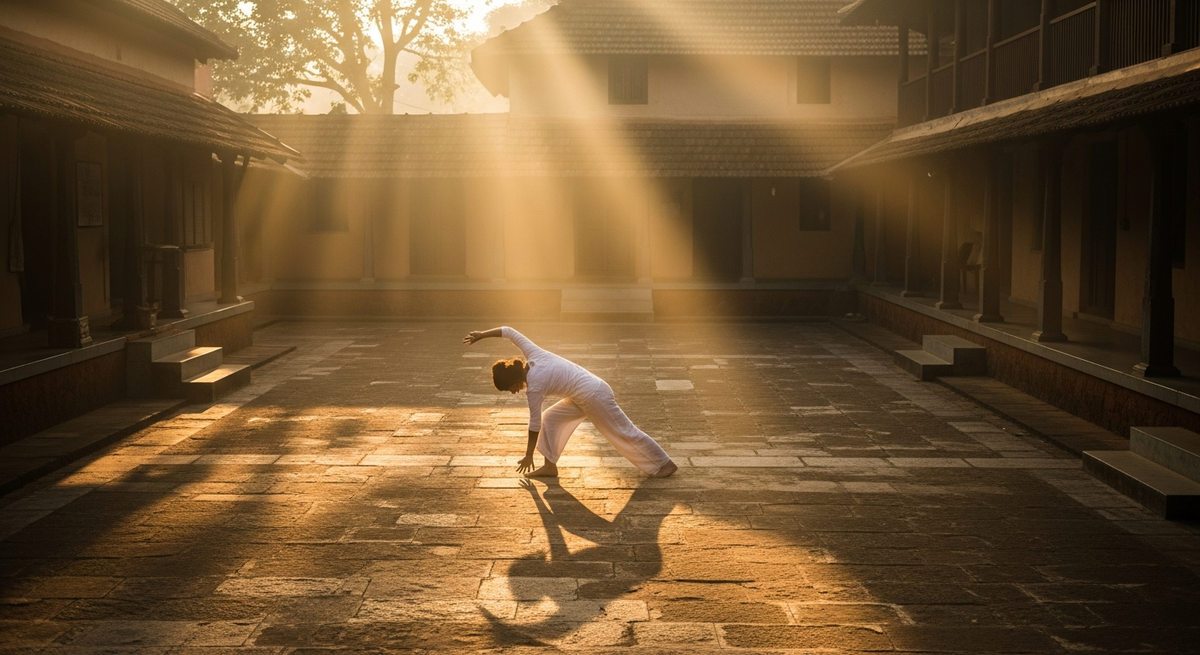
The Five Principles of Sivananda Yoga
Swami Vishnudevananda distilled Sivananda teachings into five core principles that form the basis of every class and teacher training within the tradition.
Proper Exercise: Asana as Glandular and Spinal Health
The Sivananda approach emphasises the spine as the primary site of health. The twelve basic asanas of the tradition are chosen to move the spine in every direction, stimulate the endocrine glands and maintain the flexibility of the body into old age. The sequence is not fast: postures are held, and the focus is on alignment, breath and the inward quality of attention.
Proper Breathing: Pranayama as Life Force Management
Pranayama receives explicit attention in Sivananda classes, not as an afterthought but as a core practice. Kapalabhati and Anuloma Viloma (alternate nostril breathing) are typically practised at the beginning of every session. The emphasis is on the relationship between breath and prana, the life force described in classical yoga texts as circulating through the body via channels called nadis.
Proper Relaxation, Diet and Positive Thinking
Savasana is treated seriously in Sivananda yoga, not as a brief cooldown but as a practice of conscious relaxation that may last ten to fifteen minutes. Diet guidance follows traditional yogic recommendations: vegetarian food that is fresh, light and sattvic (conducive to clarity). The fifth principle, positive thinking and meditation, acknowledges that the mind is the source of both suffering and liberation, and that meditation practice is the central tool for working with it.
The Twelve Basic Asanas
The core sequence used in Sivananda classes consists of twelve postures: Headstand, Shoulderstand, Plough, Fish, Seated Forward Bend, Cobra, Locust, Bow, Half Spinal Twist, Crow (or Peacock), Standing Forward Bend, and Triangle. These are preceded by sun salutations and followed by final relaxation. The sequence is not changed from class to class: consistency is a deliberate pedagogical choice, allowing students to develop familiarity and depth in the same postures over time.
This contrasts with styles like Vinyasa Flow, where the sequence varies constantly, and with Ashtanga, which has fixed series but at a significantly faster pace. The Sivananda pace is slow and meditative, and the holding of postures allows the nervous system to settle rather than continuously respond to new stimuli.
Featured Programme
The I AM Programme
An adult mindfulness and nondual awareness course that complements classical yoga with inner inquiry.
Explore the ProgrammeSivananda vs Ashtanga vs Iyengar: Key Differences
Ashtanga yoga, as systematised by K. Pattabhi Jois, uses fixed series practised at a faster, breath-linked pace. The emphasis is on vinyasa (movement coordinated with breath), bandhas (internal locks) and the development of heat in the body. It demands considerable physical fitness and is progressive in the sense that students move through increasingly demanding series.
Iyengar yoga, developed by B.K.S. Iyengar, prioritises precise anatomical alignment above all else, using props extensively to allow every student to access correct form regardless of their flexibility or strength. Classes are slower and highly technical, with long holds and detailed instruction.
Sivananda yoga occupies a different space. It is less physically demanding than Ashtanga and less technically focused than Iyengar. Its strength is its completeness: a Sivananda class addresses the body, breath, relaxation and meditation within a single session, following a tradition that views yoga as an entire way of life rather than a physical practice with philosophical add-ons.
Who Sivananda Yoga Suits
The tradition is particularly well suited to practitioners who want a complete practice rather than a workout, who are drawn to the philosophical and spiritual dimensions of yoga, or who are recovering from illness and need a gentle, structured approach. It is also valuable for anyone who finds the variety and pace of contemporary flow classes overwhelming or who wants the depth that comes from practising the same sequence repeatedly.
Teacher training within the Sivananda tradition is among the most thorough available, covering anatomy, philosophy, Sanskrit, pranayama, meditation and teaching methodology over an intensive four-week residential programme. Graduates tend to have a broad grounding in classical yoga that serves them well regardless of which style they eventually teach.
Teaching Note from Shital Chute
Sivananda yoga is a style I find genuinely approachable to recommend to people who are overwhelmed by all the different yoga brands and styles out there, because it is built around a clear, memorable structure, the Five Points of Yoga covering proper exercise, breathing, relaxation, diet, and positive thinking. What I have noticed resonates with our readers is how the sequence of the classical class stays consistent week to week, which takes a lot of decision fatigue out of showing up to practice. I also like that it does not position itself as more intense or advanced than other styles, it is simply organized around a philosophy of what a complete, sustainable practice includes beyond just the physical poses. For someone brand new to yoga looking for structure rather than novelty, I think this is a genuinely useful place to start.
Frequently Asked Questions
What are the Five Points of Sivananda Yoga?
The Five Points are proper exercise (asanas), proper breathing (pranayama), proper relaxation (savasana), proper diet, and positive thinking combined with meditation. Together they are meant to represent a complete approach to wellbeing rather than just a sequence of physical poses.
Is Sivananda yoga good for complete beginners?
Yes, Sivananda yoga is generally considered approachable for beginners because classes tend to follow a consistent, structured sequence, and instructors typically offer modifications for different ability levels. The classical class format also includes plenty of rest between poses, which can make it more accessible than faster paced styles.
How is Sivananda yoga different from other styles like Vinyasa or Ashtanga?
Vinyasa and Ashtanga classes tend to move continuously between poses linked to the breath, while a traditional Sivananda class follows a fixed sequence of twelve basic postures with rest periods and pranayama built in throughout. Sivananda also places more explicit emphasis on diet and mental attitude as part of the practice, not just the physical sequence.
Do I need prior yoga experience to attend a Sivananda class?
No prior experience is needed, since the practice is designed to be taught progressively and instructors commonly offer variations for beginners within the same class. It can also be a useful style for more experienced practitioners who want a structured, less improvisational practice.
What does a typical Sivananda yoga class actually involve?
A typical class usually opens with relaxation and breathing exercises, moves through the twelve basic postures in a set order with rest breaks in between, and closes with a longer relaxation period. Chanting or a brief meditation is often included as well, reflecting the tradition's broader focus on mental and spiritual wellbeing alongside the physical practice.
Free Guide for Parents & Educators
Mini Mindfulness Masters
Simple practices to help children slow down, feel calm, and become more present. A free download, straight to your inbox.
No spam, ever. Unsubscribe at any time.

Written by
Shital ChuteMarketing Lead, The Holistic Care | Mindfulness & Behavioral Health Educator
Shital Chute leads Marketing at The Holistic Care, where she shapes how the platform's mindfulness courses, books and free resources reach the families, schools and workplaces who need them. Alongside this role, she is a passionate advocate and educator for mindfulness and behavioral health, drawing on that perspective to help shape content that is genuinely useful, not just promotional.
Her work at The Holistic Care sits at the intersection of communication and care: translating research-backed mindfulness practices into clear, practical guidance for parents, teachers and adults navigating everyday stress.


