
Sirsasana (Headstand) is the 'King of Asanas' — a transformative inversion that floods the brain, activates the Crown Chakra, and marks the pinnacle of a steady, courageous yoga practice.
Sirsasana: The Headstand and Why It Deserves Respect
Sirsasana is called the king of asanas in the classical Hatha yoga texts, a title that reflects both its prestige and the demands it makes. When practised correctly and with adequate preparation, it is one of the most beneficial postures in yoga, improving circulation, strengthening the shoulders and core, and producing a distinctive quality of focused calm. When practised incorrectly, it is one of the most dangerous.
The headstand requires more than the ability to get upside down. It requires a strong foundation through the forearms and shoulders that removes most of the load from the cervical spine, a well-developed sense of body position in space, and the core stability to hold the entire body in a vertical line without collapse. Each of these qualities needs to be built before the full posture is attempted.
This guide covers the step-by-step approach for beginners, the foundational postures that create the necessary strength, the strict contraindications, and the common mistakes that turn a beneficial practice into a source of injury.
Building the Foundation: Dolphin and Forearm Balance
The single most important preparation for Sirsasana is developing strength and stability in the forearms, shoulders, and upper back. The temptation is to skip this stage and go directly to the headstand, but doing so transfers weight to the neck and cervical spine, which is precisely what the pose is designed to avoid.
Dolphin Pose: The Essential Preparation
Dolphin pose (ardha pincha mayurasana) is performed with forearms on the floor, shoulder-width apart, and hips raised as in a downward-facing dog. The key is to actively press the forearms into the floor, spreading the fingers and drawing the shoulders away from the ears. This strengthens the serratus anterior, rhomboids, and rotator cuff, which are the muscles responsible for supporting the shoulder girdle in Sirsasana.
Begin with five holds of thirty seconds each and work up to one to two minutes. When you can hold dolphin comfortably for two minutes without the shoulders collapsing toward the ears, you have the foundation needed for Sirsasana.
Forearm Balance: The Direct Precursor
Pincha mayurasana (forearm balance) requires the same shoulder and core stability as Sirsasana, with the additional challenge of balance without the wall. Many teachers recommend that practitioners can comfortably balance in forearm balance before attempting the full headstand. This is conservative advice worth following.
Step-by-Step: Sirsasana With Wall Support
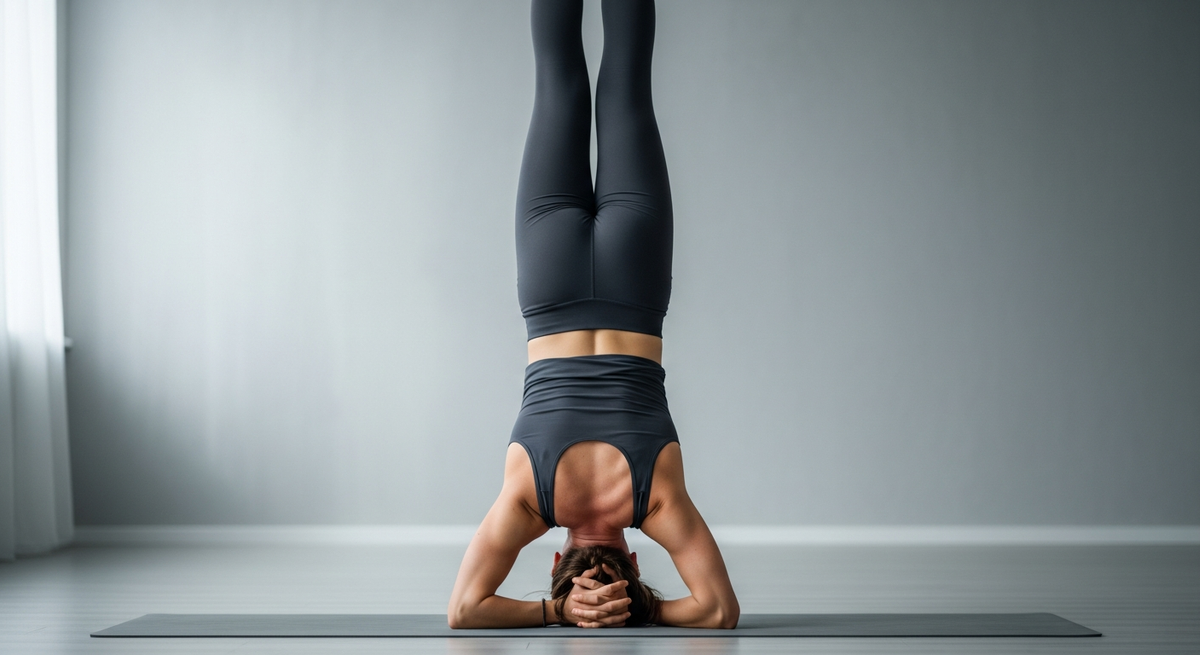
Begin in a kneeling position facing a wall, close enough to touch it with an outstretched arm. Place the forearms on the floor, shoulder-width apart (or slightly narrower), with the fingers interlaced and the little fingers resting on the floor. The crown of the head rests in the cup formed by the hands, with the hands cradling the back of the skull. Check that the weight is on the forearms and the wrists, not on the top of the head: some practitioners benefit from tucking a folded blanket under the crown to confirm correct placement.
Walk the feet in toward the head, lifting the hips until the hips are over the shoulders. Bend the knees and draw them toward the chest, using core engagement to float both feet off the floor simultaneously rather than kicking up. Allow the knees to come to the ceiling first, holding this L-shape with knees bent until balance is found. Then extend one leg toward the wall, and then the other, finding the vertical line.
In the full posture, the body is straight from crown to heel, the core is engaged, the inner thighs press together, and the toes point toward the ceiling. The forearms and wrists bear the majority of the weight. The head touches the floor but should not bear significant load.
Continue Your Yoga Journey
Benefits: Circulation, Lymph, and Concentration
Circulation: Reversing the Gravity Load
In an upright standing or seated position, the heart works continuously against gravity to return venous blood from the lower extremities. In Sirsasana, the lower body is elevated above the heart, and venous return is assisted by gravity rather than opposed by it. This reduces the load on the cardiovascular system and, after returning to standing, produces a noticeable sense of refreshment and increased circulation to the head and upper body.
Lymphatic System: Drainage and Immunity
The lymphatic system, unlike the circulatory system, has no pump. It relies on muscle movement and positional changes to drain. Inversions assist lymphatic drainage from the legs and lower abdomen and have been associated in traditional yoga with improved immune function. While the scientific evidence for lymphatic benefits of inversions specifically is limited, the general principle that movement and postural variety support lymphatic circulation is well established.
Concentration: The Focused State
Practitioners consistently report that regular Sirsasana practice produces a quality of focused concentration that carries over into meditation and daily activity. The neurological explanation involves the redistribution of blood flow to the prefrontal cortex and the increased proprioceptive demand of balancing inverted, which requires concentrated attention. The classical yogic explanation involves the reversal of apana vayu and the drawing of energy upward toward Sahasrara. Both accounts describe the same phenomenon from different frameworks.
Strict Contraindications: Who Must Not Practise Sirsasana
Sirsasana has a longer list of absolute contraindications than most other yoga poses, and these must be respected without exception.
Neck injury or cervical spine pathology of any kind is an absolute contraindication. Even with correct technique, the headstand places the cervical spine in a position of potential vulnerability. Anyone with a history of disc issues, stenosis, spondylosis, or whiplash should not practise Sirsasana. Uncontrolled high blood pressure is a contraindication because the posture increases intracranial pressure. Glaucoma and other conditions involving raised intraocular pressure are contraindicated for the same reason. Retinal detachment, any acute ear or sinus infection, and any condition causing vertigo are all contraindications. Pregnancy is a contraindication for anyone who has not already established a consistent headstand practice before conception.
Those with osteoporosis, particularly of the cervical spine, should avoid the pose. Anyone with a history of stroke or transient ischaemic attack should consult a cardiologist before attempting inversions.
Featured Programme
The I AM Programme
A structured nondual mindfulness programme for adults, integrating pranayama, meditation, and body awareness through guided practice.
Explore the ProgrammeCommon Mistakes and How to Avoid Them
Mistake: Too Much Weight on the Head
The most common and most dangerous mistake in Sirsasana is bearing the majority of the weight on the crown of the head rather than on the forearms. This compresses the cervical spine and can, over time, cause disc damage, nerve impingement, or in acute cases, fracture. The correction is to actively press the forearms into the floor throughout the pose, maintaining the sensation that you are pushing the floor away.
Mistake: Kicking Up
Kicking up into Sirsasana creates momentum that bypasses core engagement and increases the risk of overshooting and falling. The controlled approach, drawing the knees to the chest and floating up, is slower and more demanding but is the technique that builds the stability needed for a safe, long-term practice.
Mistake: Holding Too Long Too Soon
Classical texts recommend building the hold time of Sirsasana very gradually. Begin with thirty seconds and add fifteen seconds per week. Most experienced practitioners hold for three to five minutes. Holding beyond one's current strength level causes the shoulders to collapse and the load to shift to the neck. A short, clean Sirsasana is considerably more beneficial than a long, collapsing one.
The Counterpose: Shoulderstand or Child Pose
Sirsasana should always be followed by a counterpose. The most commonly recommended is Sarvangasana (shoulderstand), which creates cervical flexion to counterbalance the cervical extension load of the headstand. Balasana (child pose) is a gentler alternative and appropriate for beginners. Spend at least half the time you held Sirsasana in the counterpose, allowing the cervical spine to decompress and the nervous system to settle before returning to an upright posture.
The headstand rewards patience, preparation, and respect for the body's limitations. Approached with that attitude, it is one of the most rewarding postures in yoga. Approached carelessly, it is one of the quickest routes to injury. The difference is entirely in the preparation.
Written by
Editorial Team

