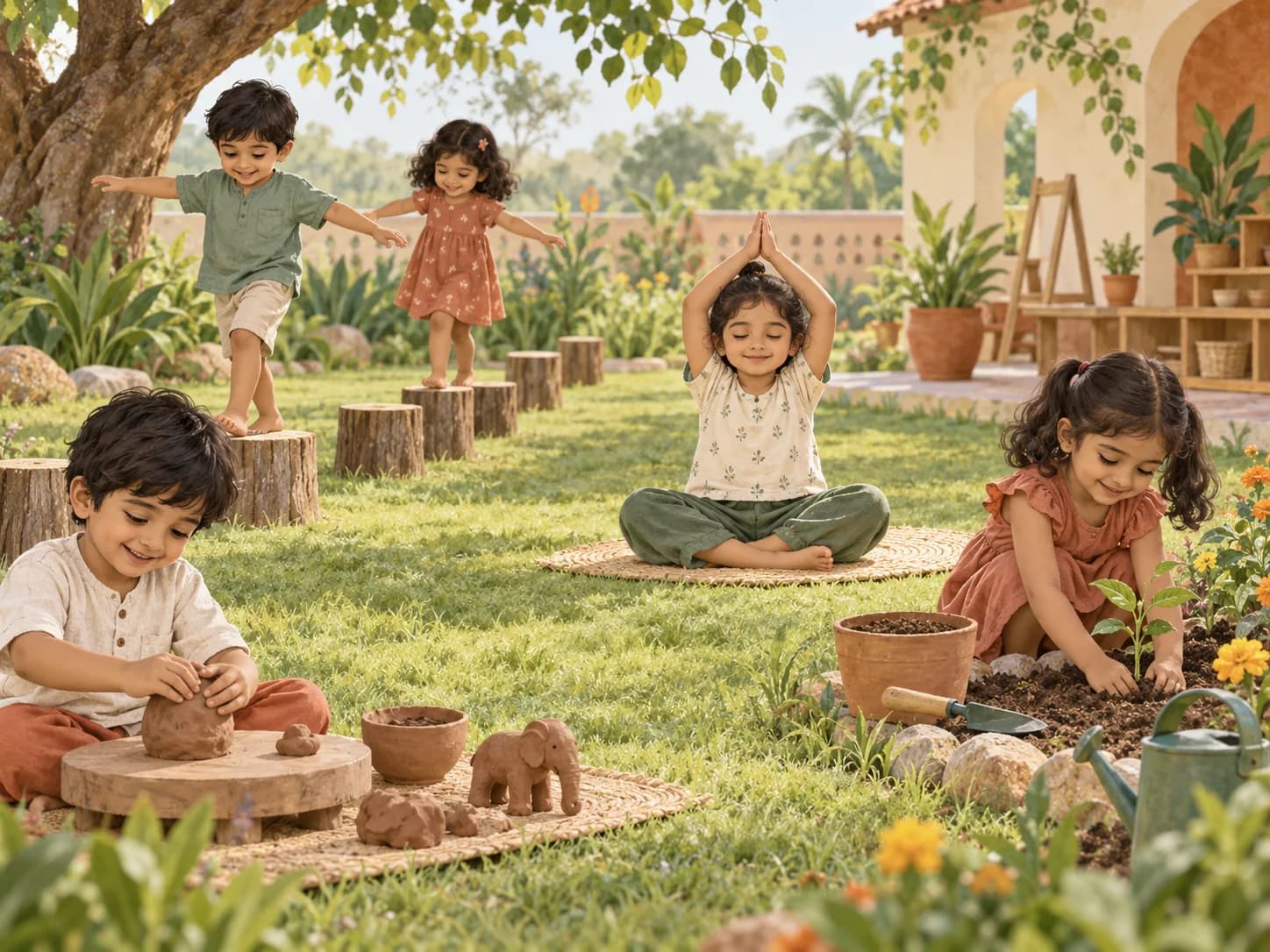
01 - Prithvi
Ground & Grow
Body, senses, stability, health, independence and nature connection.
The Holistic Care Early Years Initiative
Five elemental pathways. One whole child.
The Holistic Care Five Elements Early Years Framework
A mindfulness-informed framework for Nursery, LKG and UKG that brings together nature, play, movement, communication, emotional wellbeing, creativity and attentive awareness.
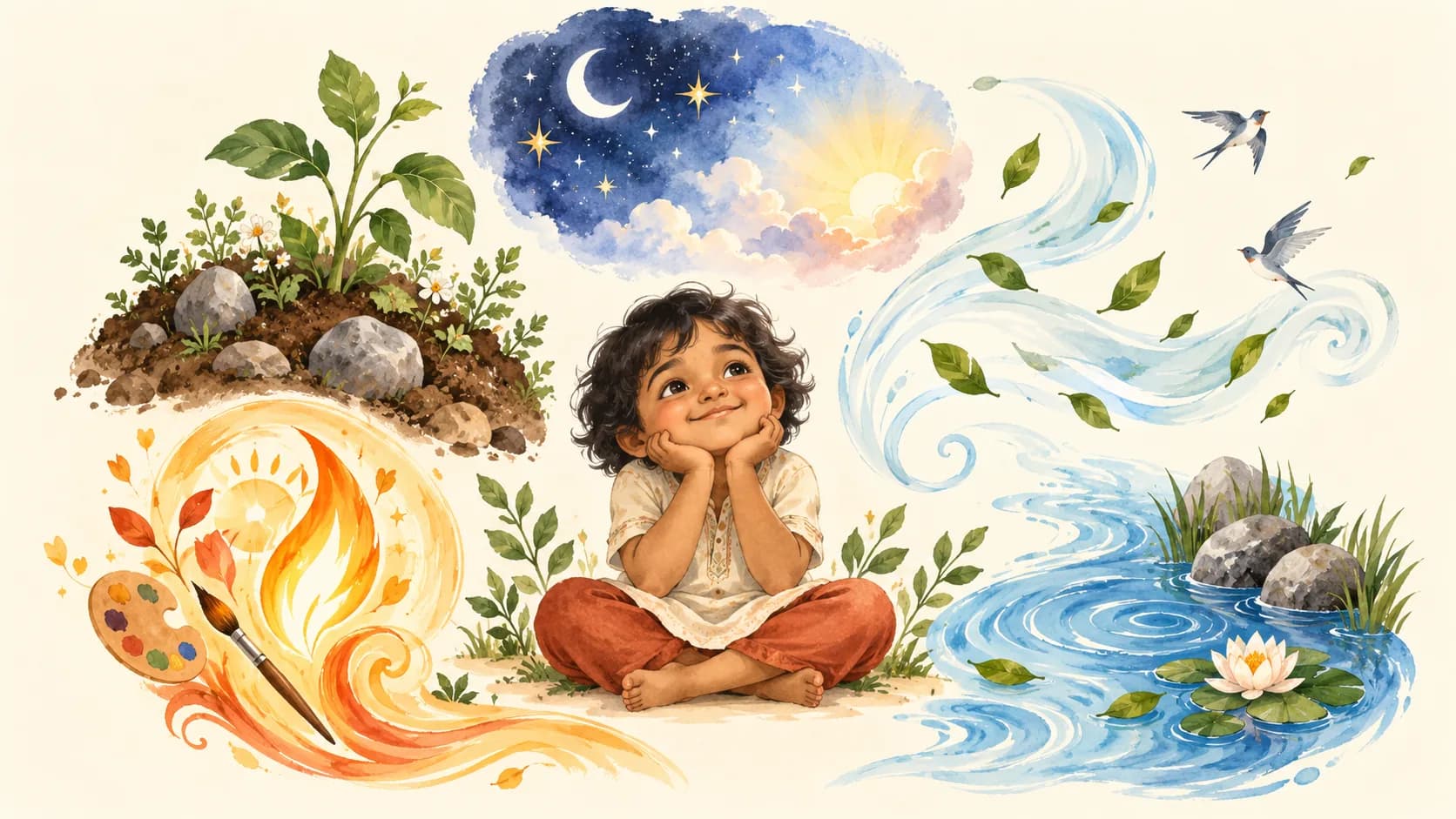
Not five separate subjects
Five interconnected pathways that support whole-child development.
The idea
Body, emotion, language, thought, creativity, relationships and environment continually influence one another. PanchaVikas uses the Five Elements as pathways to development, not as isolated subjects.
The Five Pathways
Each pathway has a natural emphasis, yet every learning experience can touch several developmental domains at once.
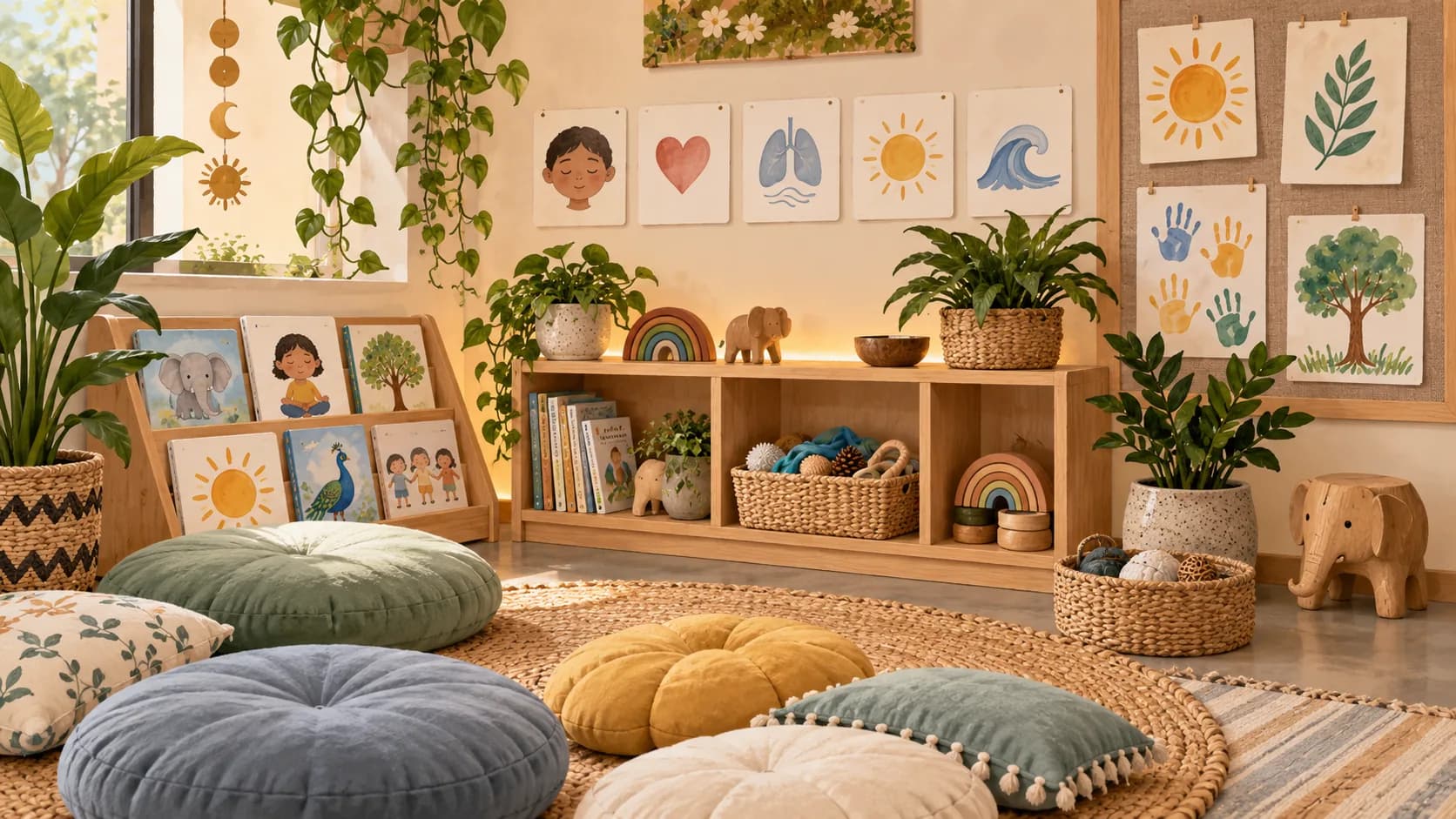
Body, senses, stability, health, independence and nature connection.
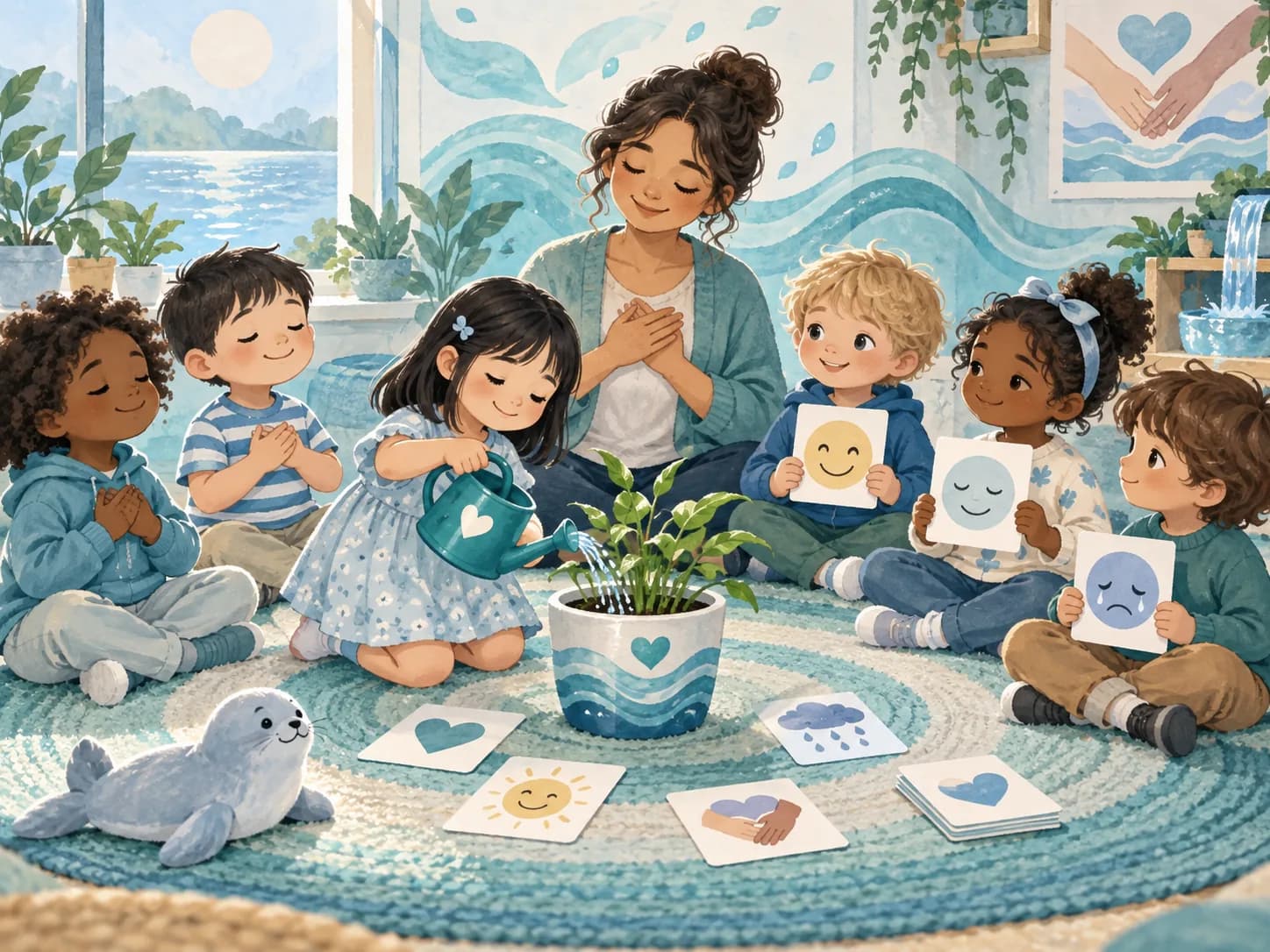
Emotion, empathy, adaptability, relationships, kindness and co-regulation.
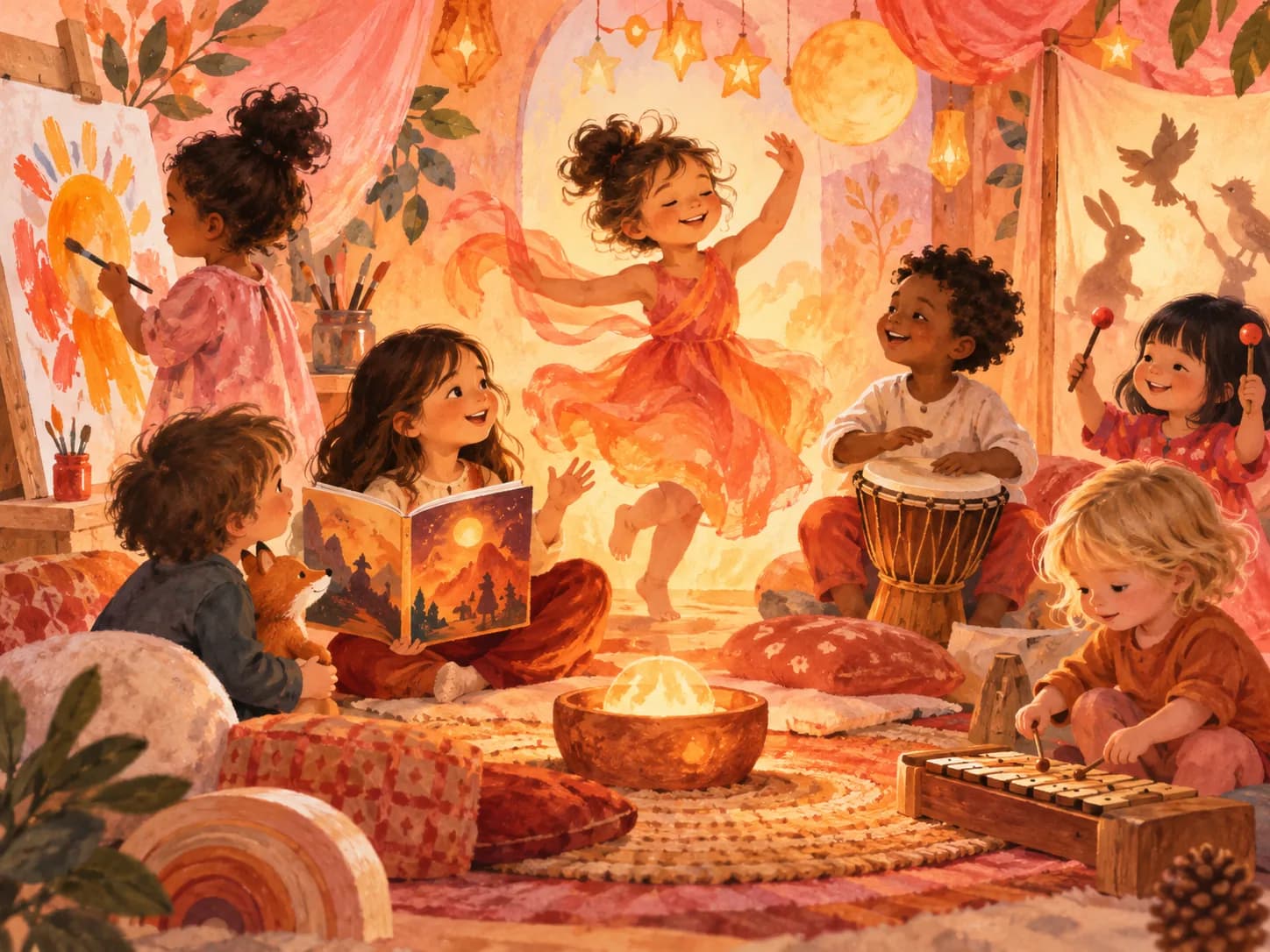
Curiosity, confidence, energy, creativity, courage and expression.
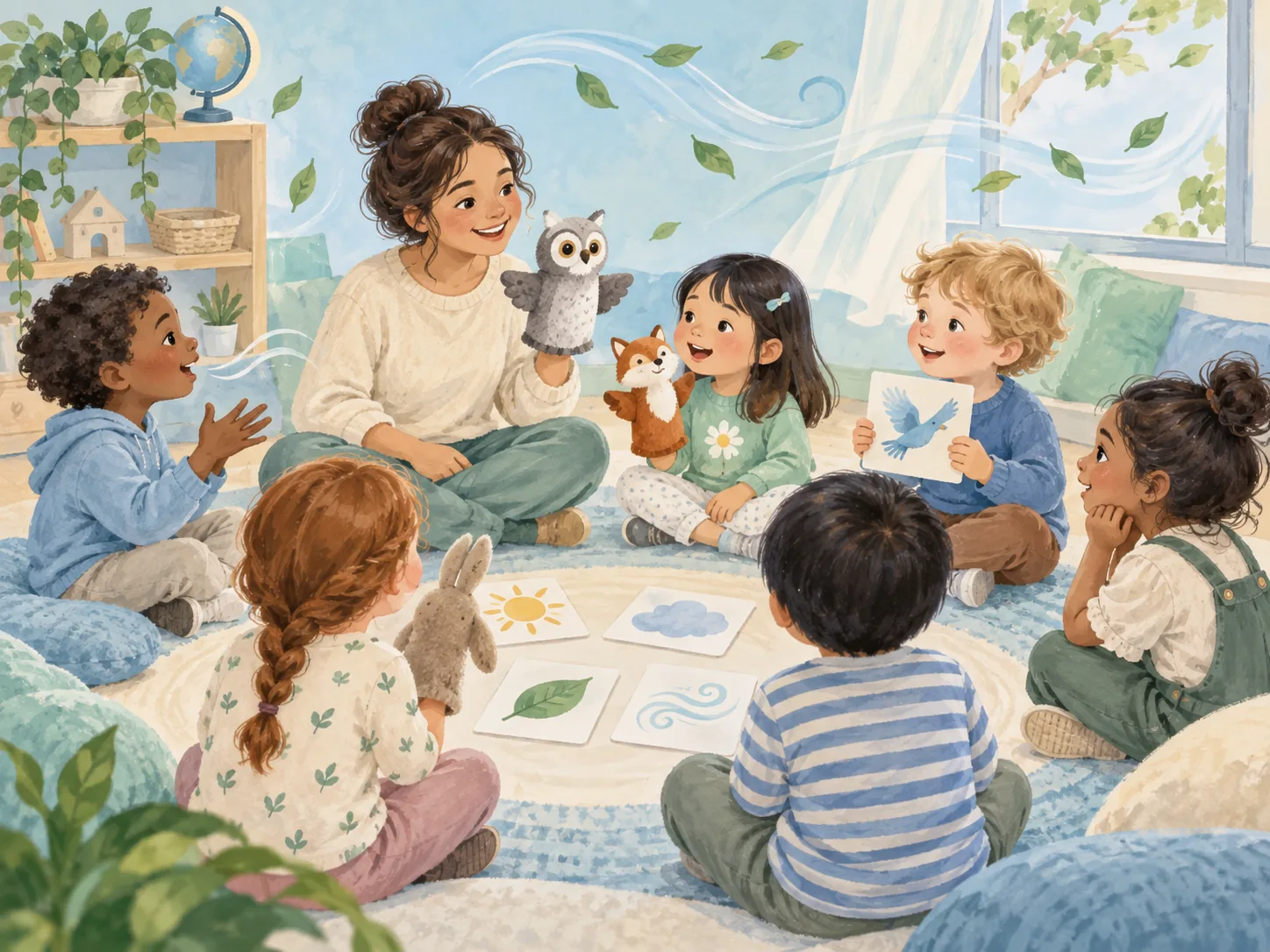
Breath, movement, listening, language, voice and mindful communication.
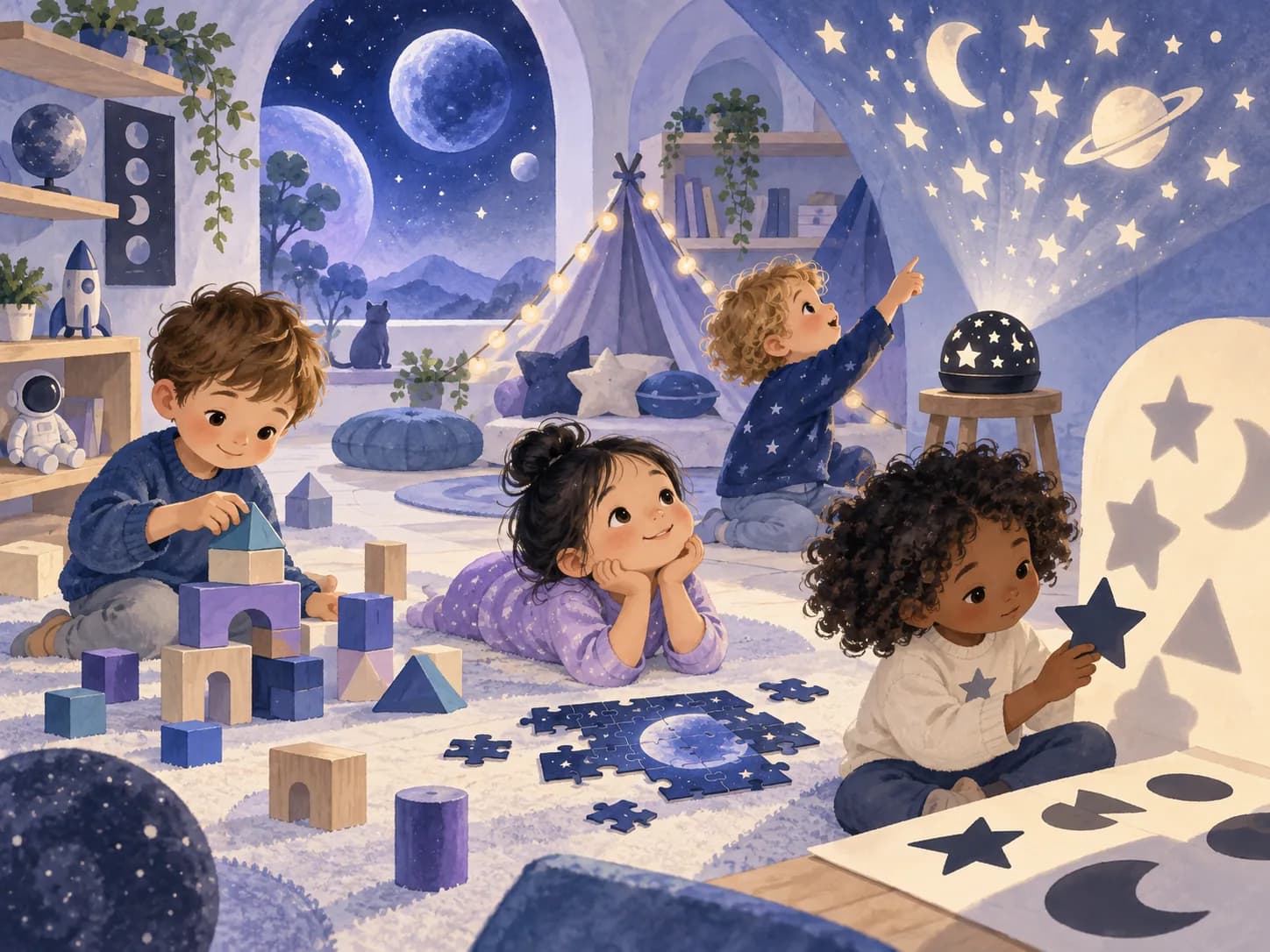
Attention, awareness, inquiry, thinking, imagination and wonder.
The THC layer
Mindfulness in PanchaVikas is not limited to sitting still. It may be noticing the feet, listening for three sounds, feeling a breath, naming an emotion, pausing before acting, or watching what changes in nature.
Prithvi
Grounding, body awareness and sensory noticing.
Jal
Emotion awareness, kindness and calming strategies.
Agni
Noticing energy and expressing it constructively.
Vayu
Breath, listening and mindful communication.
Akash
Attention, silence, wonder and spacious awareness.
THC philosophy
Presence, compassion, connection and non-judgmental noticing.
Signature practice
A shared language for children, teachers and parents that makes mindfulness usable during real classroom moments.
Create a tiny space before the next action. Stop, settle or take one gentle breath.
Notice the body, feelings, sounds, breath, other people or what is happening around you.
Respond with curiosity, kindness, communication, creativity or a more considered choice.
“We do not teach children what to experience. We help them learn how to notice experience.”
Age-progressive design
The same philosophy deepens gradually. Expectations, language, duration and complexity change as children grow.
Whole-school design
Experiences, play, awareness and developmental growth.
Presence, facilitation, co-regulation and observation.
Nature, sensory balance, calm spaces and meaningful resources.
Simple home practices and continuity between school and family.
Implementation planning, culture, review and leadership support.
For schools
PanchaVikas is being developed as a long-term school partnership system combining curriculum, educator development, mindfulness resources, parent engagement and implementation support.
For schools that want a structured framework and classroom resources.
Add guided implementation and teacher capability building.
For schools that want support across the whole early-years ecosystem.
Public framework guide
Download the concise guide for the philosophy, five pathways, mindfulness layer, age progression and school implementation model.
No. The Five Elements provide an organising language. Learning remains integrated across physical, cognitive, social-emotional, language, creative and learning-habit development.
The full curriculum is being developed for Nursery, LKG and UKG with 72 structured learning experiences planned per level, alongside short daily micro-practices.
PanchaVikas is an independent educational framework. References to NCF-FS indicate design alignment and educational reference only, not approval, certification or endorsement by NCERT or the Ministry of Education.