
Rest rarely arrives after everything else is done. Here is how to make a modest place for Yoga Nidra in the middle of an ordinary life.
There is a familiar promise hidden inside a lot of advice about rest: first finish everything, then relax. Clear the inbox, put away the dishes, answer the last message, make sure everyone else is settled. By the time you reach the end of that list, there is either no evening left or a fresh list has appeared.
I would rather begin with a less tidy proposition. A useful practice has to fit the life in front of us. It has to be possible in a flat with street noise, in a home where someone might call your name, or at the end of a day when you have only twelve minutes before another responsibility begins.
This is one reason Yoga Nidra can fit here. You can lie down, listen to a guide and let attention move through the body and breath. There is no sequence of poses to remember and no need to arrange your thoughts into something admirable first. The practice can be spacious, but the doorway into it is small: a place to rest and a little time that belongs to you.
That small doorway is easy to miss if we imagine that rest must look beautiful.
The room does not need to become a retreat
Picture a fairly ordinary evening. Someone is still in the kitchen. A phone vibrates in another room. A child cannot find a notebook. The street outside has decided that this is the moment for a horn to sound. None of this is conducive to a photograph of a perfect meditation space. It is, however, the setting in which most of us live.
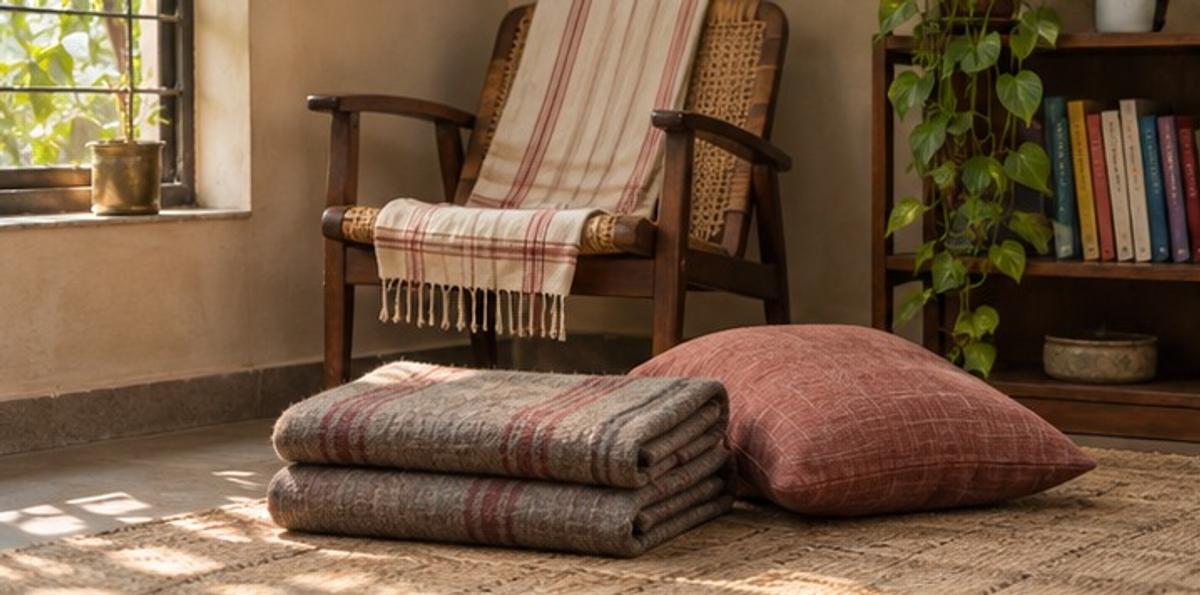
If you can shut a door for twenty minutes, wonderful. If you cannot, you can still try a practice. Choose a place where your body feels supported. Put a folded towel beneath your knees, use a pillow, or sit back in a chair if lying flat is uncomfortable. Let the recording be audible without making it loud enough to shut out the world.
Some sounds will remain. You need not treat each one as an enemy. You can notice a sound, feel where your body meets the chair or floor, and return to the next instruction you hear. This is different from pretending that the sound was not there. It gives you a gentle way back.
There are practical limits, of course. If you are the only adult caring for a small child, you need to remain available. If you are driving, cooking over a flame or responsible for someone who needs immediate attention, choose another time. Yoga Nidra asks for enough safety and ease that you can stop monitoring every moment. It does not ask you to ignore real responsibilities.
A pause is something a household can share
Rest at home is often treated as a private matter of discipline. Yet the people around us shape whether we get to take it.
“I am going to lie down for fifteen minutes. Could you answer the door if it rings?” is a different invitation from disappearing and hoping no one notices. It tells the truth about what you need and gives someone else a clear, manageable way to help. In some households, the answer will be no today. In others, it will be yes more often than you expected.
The same courtesy works in the other direction. If someone you live with wants a period of quiet, ask what would make it possible. The practice may be individual, but the conditions for it are often made together.
I like this part of Yoga Nidra because it makes rest less mysterious. We do not have to wait until we become the sort of person with an empty calendar. We can make a modest agreement, close a door if there is one, and begin.
For a parent, that might mean listening after the children are in bed. For two caregivers, it might mean taking turns so each person has a short interval without being on call. For someone who lives alone, it might mean letting a friend know they will reply later, then placing the phone out of reach. The exact arrangement matters less than the message it sends: this time is real.
Choosing a length you can actually keep
A thirty minute recording may sound appealing until the day has nowhere to put it. Starting with ten minutes is a sensible choice, not a lesser version of care. If you consistently have ten minutes, you can build a relationship with the practice. If you plan for forty and never begin, the imagined session will not help much.
Think about the point in your day when there is a natural transition. You may finish work but still feel mentally at work. You may arrive home and need a moment before joining the household. You may be waiting for dinner to cook, or preparing to go to bed. A transition provides a place for practice without asking you to create an entirely new hour.
You can browse the Yoga Nidra recordings and guides by purpose, including shorter daytime practices, beginner recordings and options for bedtime. If you would like to hear the approach before choosing a longer recording, the Stillness Library includes free guided practices.
Choose one track for a few days rather than searching for the ideal track every time. Familiarity has its own comfort. Once you know the rhythm of a voice, there is less to decide when you press play.
What to do with an interruption
The interruption may be a real request, or it may be a thought that feels like one. “I need to reply to that message.” “Did I pay the bill?” “What if I miss an important call?” The mind can turn an ordinary pause into a planning meeting with remarkable speed.
When a thought appears, you can let it be a thought for a moment. Feel the weight of your shoulders or the surface beneath your feet. Listen for the guide again. You do not need to retrace every instruction you missed.
If a person really needs you, pause the audio and attend to them. Afterward, you have options. Resume from where you stopped. Start again if you have time. Or call the practice complete for today. An interrupted session is still time in which you stopped, listened and cared for yourself. It does not become worthless because it lacked a perfect ending.
This matters especially in homes with children. They do not experience a closed bedroom door as a philosophical statement about boundaries. Sometimes they simply need their parent. A practice that collapses the moment a child speaks will be difficult to keep. A practice that allows a return has a better chance of becoming part of family life.
I would be careful about making children responsible for an adult's rest. It is enough to explain simply, where appropriate, that you are taking a short quiet break and will be available afterward. The responsibility for arranging care remains with the adults.
The body can tell the truth
One of the gentlest moments in Yoga Nidra comes before anything dramatic happens. You are invited to feel the hand, the jaw, the back of the head, the contact with the floor. Sometimes you notice warmth. Sometimes you notice nothing much at all. Sometimes you discover that your shoulders have been doing a surprising amount of work.
The point is not to make the body deliver a particular sensation. It is to hear what is already there.
That may mean changing your position. A knee that hurts does not need to become a test of character. Place a cushion beneath it. Cover yourself if you are cold. If closing your eyes feels uncomfortable, keep them open or let your gaze rest softly. If a particular image or instruction does not suit you, return to the feeling of support beneath your body.
Good practice makes room for choice. You are allowed to adjust, pause or stop. This is especially important if deep relaxation brings up difficult feelings. A guided recording can be supportive, but it cannot know what is happening in your room or inside your experience. If practice regularly leaves you distressed, consider discussing it with a qualified professional and choosing a gentler approach.
Rest does not have to produce sleep
At night, some people play Yoga Nidra because they would like to fall asleep. Others want a quiet interval before bed without measuring whether sleep follows. Both are reasonable.
The difficulty begins when the recording becomes another test: “Am I asleep yet?” “Why am I still thinking?” “Is this working?” Those questions can make a tired evening feel even more crowded.
It helps to separate what you can choose from what you cannot command. You can lower the lights, settle in a comfortable position and listen. You cannot order the body to sleep on schedule. If sleep comes, let it. If you are awake when the recording ends, the time was still a pause from active doing.
Daytime practice may call for a different ending. If you need to return to work or care, choose a recording that brings attention back to the room. Give yourself a moment to move your fingers, sit up and notice how you feel. The purpose is not to drift away from the day but to rejoin it with a little more room around your attention.
Yoga Nidra is a contemplative rest practice. It is not a substitute for enough sleep or for care when a sleep concern persists. Keeping that distinction clear allows us to appreciate the practice without asking it to solve everything.
A routine that survives a difficult week
If you want to try Yoga Nidra at home, keep the arrangement simple enough that you can repeat it. Pick a realistic time, a comfortable place and one recording. Decide in advance what to do if you are interrupted. A routine that has a plan for real life is more useful than a routine that works only on an unusually quiet day.
For the first few sessions, resist the urge to evaluate your progress. You may feel calm one day and impatient the next. You may remember every word or almost none of them. You may finish the recording with a clearer sense of your body, or simply with the knowledge that you needed a break. All of those are possible experiences of listening.
If it helps, ask yourself one ordinary question afterward: “Was there a moment when I felt supported?” The answer might be the cushion beneath your knees, a sentence in the recording, or the fact that somebody else handled dinner for a while. That is enough. You do not need a score.
Over time, a small pause can change the shape of an evening. It may make it easier to notice when you are running on empty. It may give you a kinder way to cross from one role into another. Or it may simply be fifteen minutes in which you were allowed to stop. That is already worth making room for.
Featured Programme
Art of Conscious Deep Sleep
One complete 83-minute Yoga Nidra practice in five connected tracks. Voice-only MP3s, a continuous-play page and a PDF manual.
See the ProgramBegin where you are
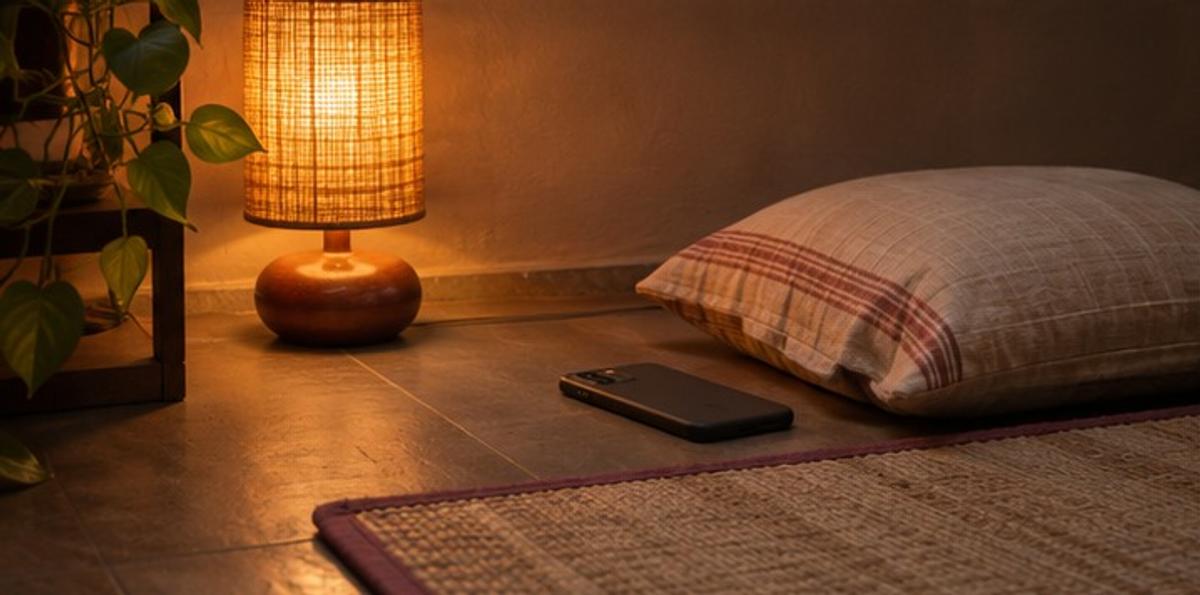
I would not wait for the perfect week. Choose a recording that suits the time you actually have. Put the phone where the audio can play without inviting you to browse. Tell the people who need to know that you will be back soon. Then lie down, or sit comfortably, and listen.
When the room makes a sound, it is still your room. When the mind wanders, it is still your mind. You can return to the voice, to the weight of your body, or simply to the permission to be here for a few minutes.
Rest does not need to be earned by completing the day. It can be one of the ways we live the day.
Free Guide for Parents & Educators
Mini Mindfulness Masters
Simple practices to help children slow down, feel calm, and become more present. A free download, straight to your inbox.
No spam, ever. Unsubscribe at any time.

Written by
Shital ChuteMarketing Lead, The Holistic Care | Mindfulness & Behavioral Health Educator
Shital Chute leads Marketing at The Holistic Care, where she shapes how the platform's mindfulness courses, books and free resources reach the families, schools and workplaces who need them. Alongside this role, she is a passionate advocate and educator for mindfulness and behavioral health, drawing on that perspective to help shape content that is genuinely useful, not just promotional.
Her work at The Holistic Care sits at the intersection of communication and care: translating research-backed mindfulness practices into clear, practical guidance for parents, teachers and adults navigating everyday stress.


