About Focus Flashlight
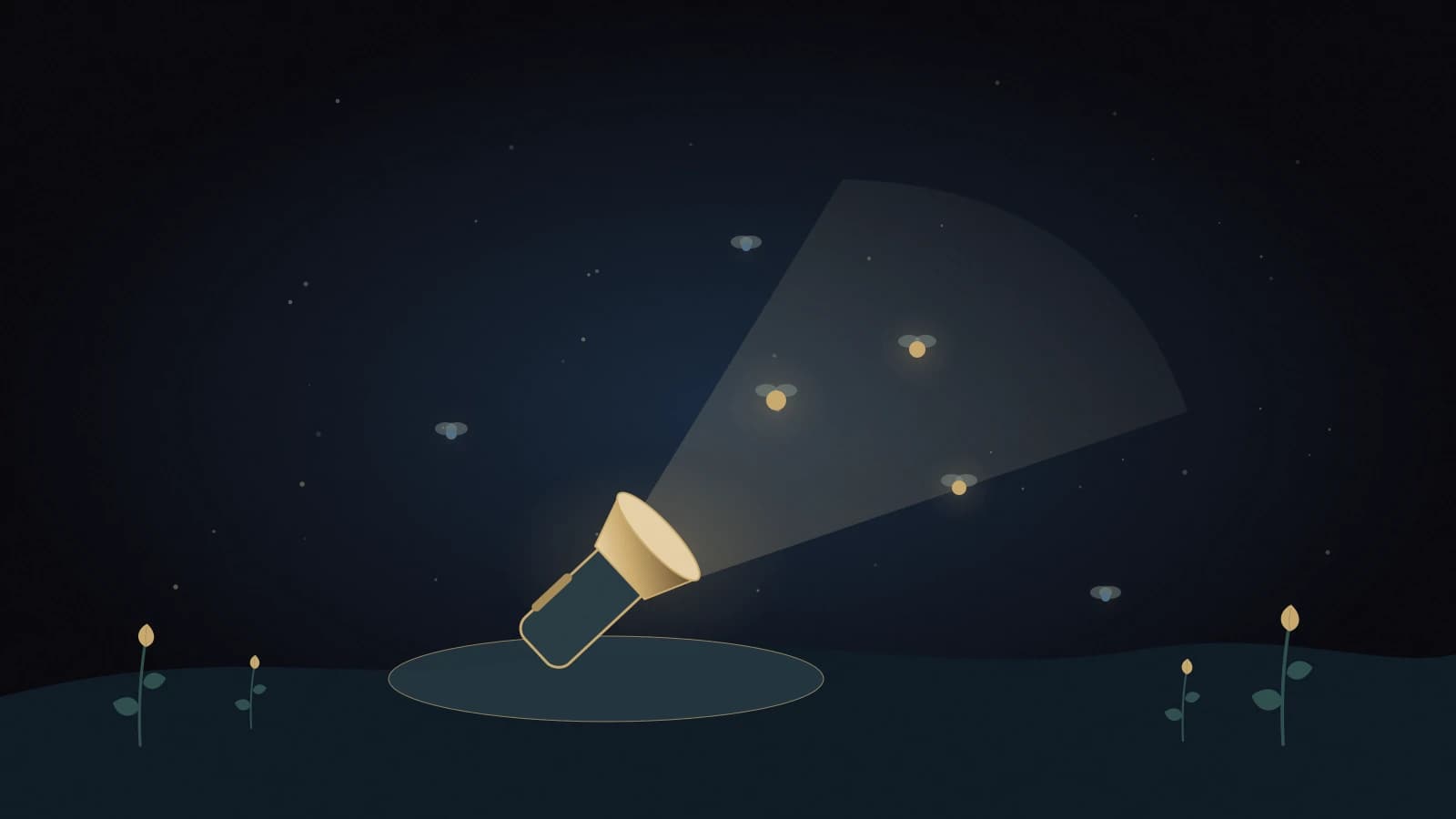
Focus Flashlight is an attention game that teaches players to select a target, notice distractions, and return to the chosen target using coloured fireflies. You follow the round's colour cue while other fireflies move through the scene. The useful skill is not simply tapping quickly. It is remembering what you are looking for and noticing when your attention shifts.
A missed firefly or wrong selection is information within the game, not a judgement about the player. Colour perception, device size, movement, fatigue, and familiarity can all affect how the task feels. Keep the round short and unpressured. When the visual target is difficult to distinguish or the activity becomes frustrating, choose a different attention exercise rather than treating persistence as the only good response.
How to play Focus Flashlight
Read the target for the current round before acting. Look at the example colour and decide whether it is clear on your device. Give yourself time to understand the rule. When you cannot reliably distinguish the target, use another activity rather than trying to guess your way through a visual task.
Direct the flashlight or selection towards fireflies matching the target. Let the others pass without needing to react to each one. Use a comfortable pace and posture. You do not need to catch everything. The point is to keep the current rule in mind while the scene changes.
When you select the wrong firefly, pause briefly and check the target again. Avoid repeatedly restarting to create a perfect score. A distracted moment can be followed by an ordinary return. Notice whether speed is making the task less comfortable, and give accuracy and willingness more attention than points.
End after a manageable round and name one observation about the task. Perhaps checking the target helped, or the screen felt crowded. Connect the idea to a small everyday action, such as reading one instruction before starting work. Do not assume that a higher game score automatically transfers to school or daily concentration.
Benefits of practising with Focus Flashlight
- Target selection: Keeping one colour in mind offers a simple example of choosing what to attend to rather than responding to every moving object.
- Noticing distraction: Recognising a wrong selection creates an opportunity to identify a shift in attention without turning it into a negative personal label.
- Rule checking: Looking back at the current target models a practical strategy for clarifying a task before adding more effort or speed.
- A low-stakes restart: Continuing after an error can help frame practice as repeated attempts rather than a requirement to maintain an unbroken perfect performance.
- Reflection on task design: Discussing colour, pace, and screen comfort keeps attention differences separate from assumptions about intelligence, motivation, or behaviour.
Who this game may suit
- Children aged seven and above who can understand the target and comfortably distinguish it.
- Teens exploring how a clear task cue differs from trying to notice everything.
- Adults interested in a brief, non-diagnostic attention activity between ordinary tasks.
- Families willing to discuss mistakes without comparing scores or demanding faster responses.
- Teachers using the game as an optional exercise rather than a screening tool.
Variations and adaptations
Younger children
Explain one round using a sample firefly before starting. Ask the child to show which colour they will look for, then let them play without constant correction. You can point out the rule between rounds rather than interrupt every selection. Stop before frustration takes over. If the display is hard to distinguish, switch to finding one familiar shape among objects off screen.
Teens and adults
Use a round to observe strategy rather than to chase a personal record. Compare starting immediately with taking a moment to read the target first. Afterwards, apply that planning idea to one small task, while recognising that transfer is a personal experiment rather than a proven effect of the game. Keep expectations separate from productivity or academic performance.
Classroom or group
Provide individual or paired practice without a public leaderboard. Explain that visual access, device differences, and motor comfort can affect the task. Offer a non-colour alternative outside the game for learners who need it. Discuss what clarified the rule, not who seemed most focused. Do not use results to decide which students have attention difficulties or deserve additional support.
For parents and teachers
Introduce Focus Flashlight as an experiment with a task, not a test of the child. Say, "Let us check what we are looking for before we start." Avoid "You can focus on this, so you should focus at school," because different activities make different demands. Never use the game as punishment for distraction or require a score before a break. Watch for frustration, visual discomfort, or a target that is difficult to distinguish. Give practical support and offer another activity. Questions about persistent attention difficulties should be discussed with suitable professionals, not answered by how well a child catches digital fireflies.
Why this approach is used
MacLean and colleagues studied sustained attention in the context of intensive adult meditation training. Their findings are relevant to the broader study of attention, but the training setting and duration differ greatly from this short game. The study does not establish that catching fireflies improves school performance or treats an attention condition. Focus Flashlight directly rehearses a simpler task: select a visual target, remember the rule, and return after a distraction. Any claim about lasting benefits beyond the game would need direct evaluation. Scores should therefore remain game feedback rather than evidence of a change in cognitive ability.
Research
- MacLean, K. A., Ferrer, E., Aichele, S. R., et al. (2010). Intensive meditation training improves perceptual discrimination and sustained attention. Psychological Science.
These sources concern the underlying technique or a related programme, not a direct evaluation of this game.
Read our related guide for Focus Flashlight.
Frequently asked questions
What age is Focus Flashlight suitable for?
Focus Flashlight is recommended for ages 7+. The interface offers Little (5-8), Older (9-12), and Teen+ modes. These controls change presentation; they do not override the guidance for this particular game. Younger players should have a parent or teacher nearby.
What does Focus Flashlight teach?
It practises choosing and returning attention. It is especially suited to exploring a chosen target and a gentle return of attention. Use a short round without pressure, then discuss what was noticed rather than treating completion as a measure of personal progress.
Is Focus Flashlight free, and do I need to download anything?
Yes, it is free to play in your browser. There is no app to download. It works on phones, tablets and computers; use a modern browser and turn on the optional voice guide or sound in the game settings if you wish.
Can it replace therapy or medical care?
No. Mindfulness games are a supportive everyday practice, not a treatment. If a child or adult is struggling with ongoing anxiety, low mood, anger or sleep problems, speak with a doctor, counsellor or other qualified professional.
Does a high score mean that my concentration has improved?
It means you performed well on that round under those conditions. It does not by itself show lasting improvement in daily attention, learning, or school performance. Familiarity with the game, the device, and the target can also affect play. Use the score lightly and discuss the strategy you tried rather than treating the number as a cognitive assessment.
What should I do when I cannot distinguish the target colour?
Do not treat guessing as a test you must pass. Check the target and display, then choose another activity when the colours remain difficult to tell apart. An offline version can use different shapes instead of colour alone. This guide does not claim that the current game includes a colour-accessibility mode, and visual differences should never be interpreted as poor effort.